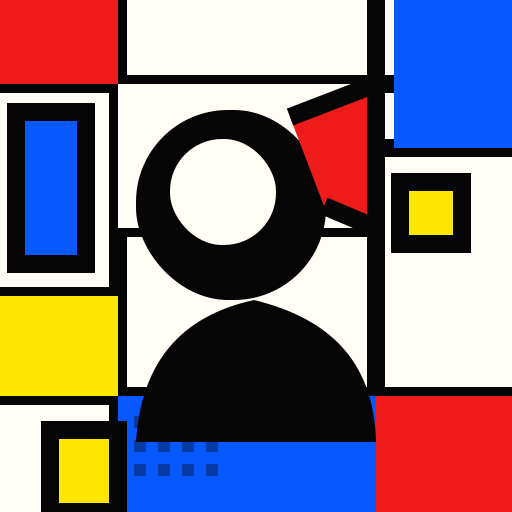
Selected digital works shaped by Neo-Constructivism/Memphis ideas, Isotype designs, De Stijl, Bauhaus grids, EBM, user manual pictograms and industrial post-internet visual noise.
MARIA FOLINA13/01Currently at: 🇨🇭
Systems Engineer
Researcher
Abstract Art
Computation
Ciphers
Surrealism
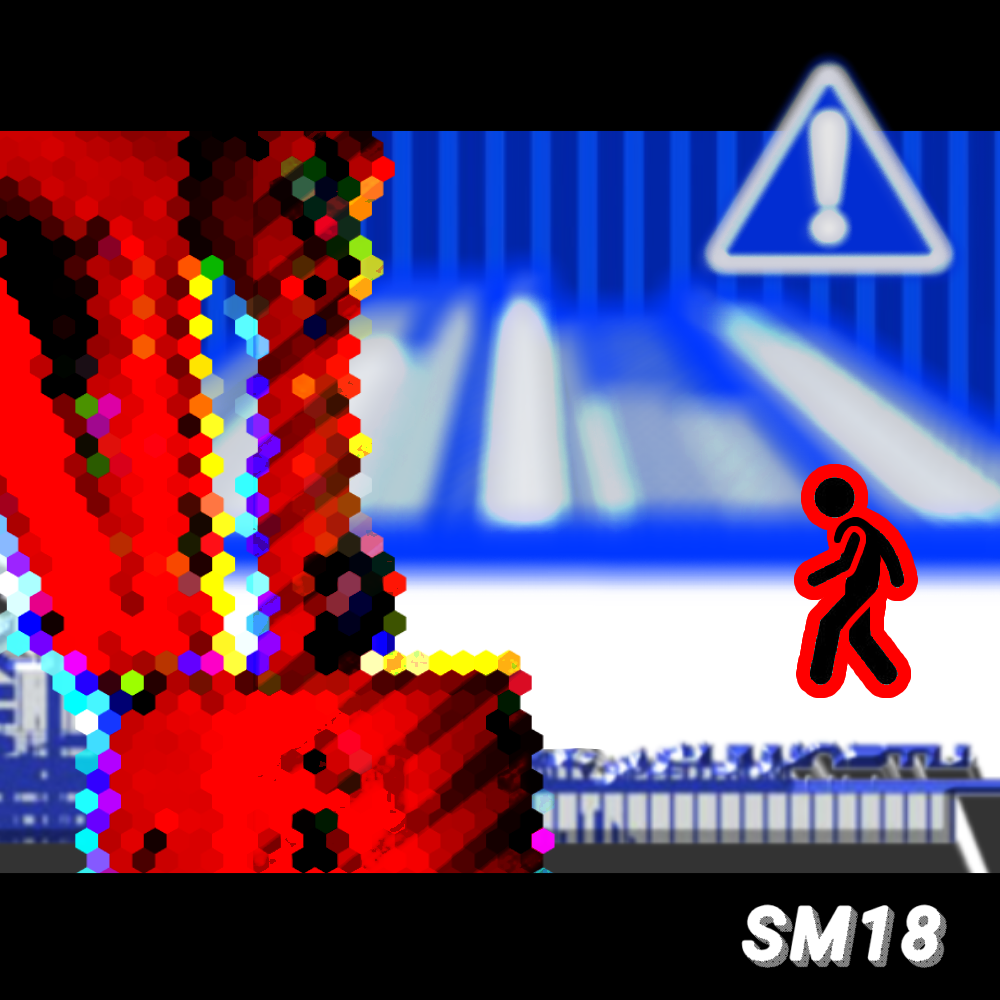
Threshold between human scale and industrial machinery, drawing from the architecture of specific test facilities. Influenced by industrial album aesthetics and warning graphics. Mixed media, using industrial supermagnet facility imagery.
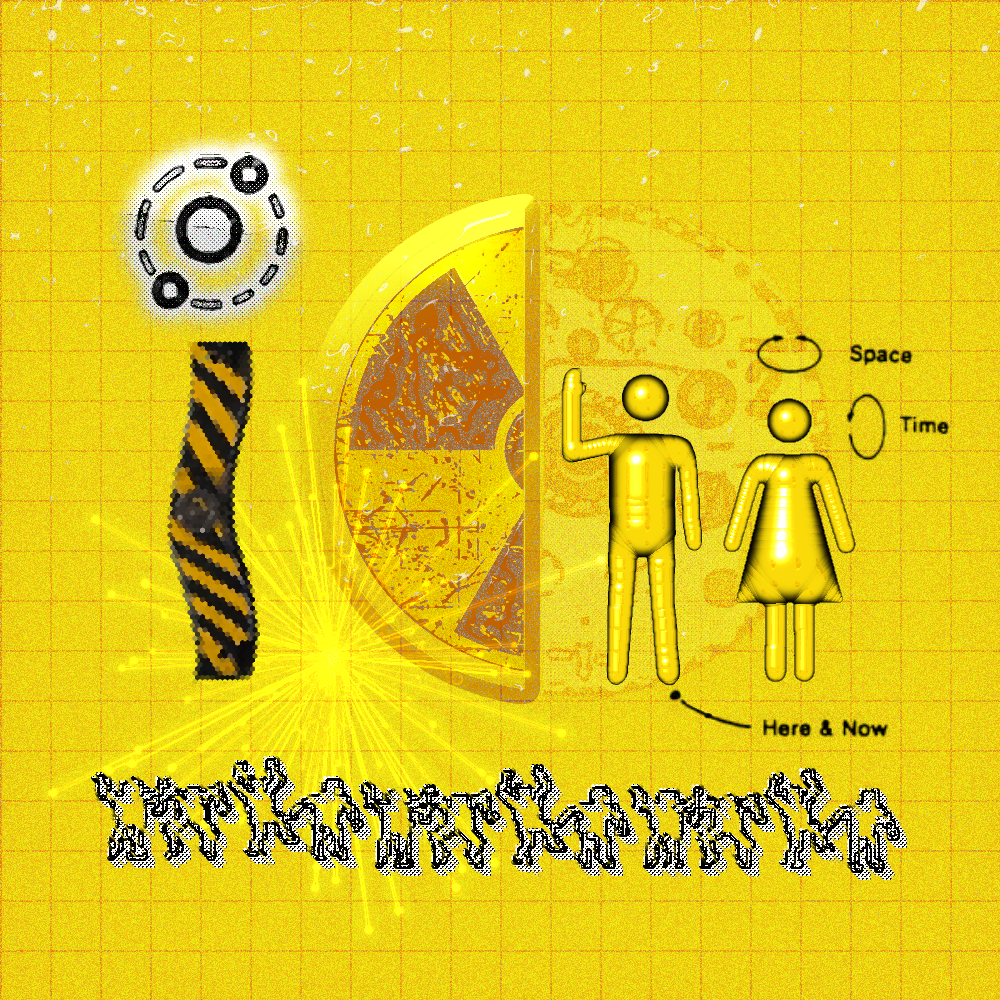
Revisiting the Pioneer Plaque through the oldest collision imagery, the work transforms scientific notation into a speculative transmission about human presence and machine observation. A modern Rosetta Stone, showing the feats of humanity.
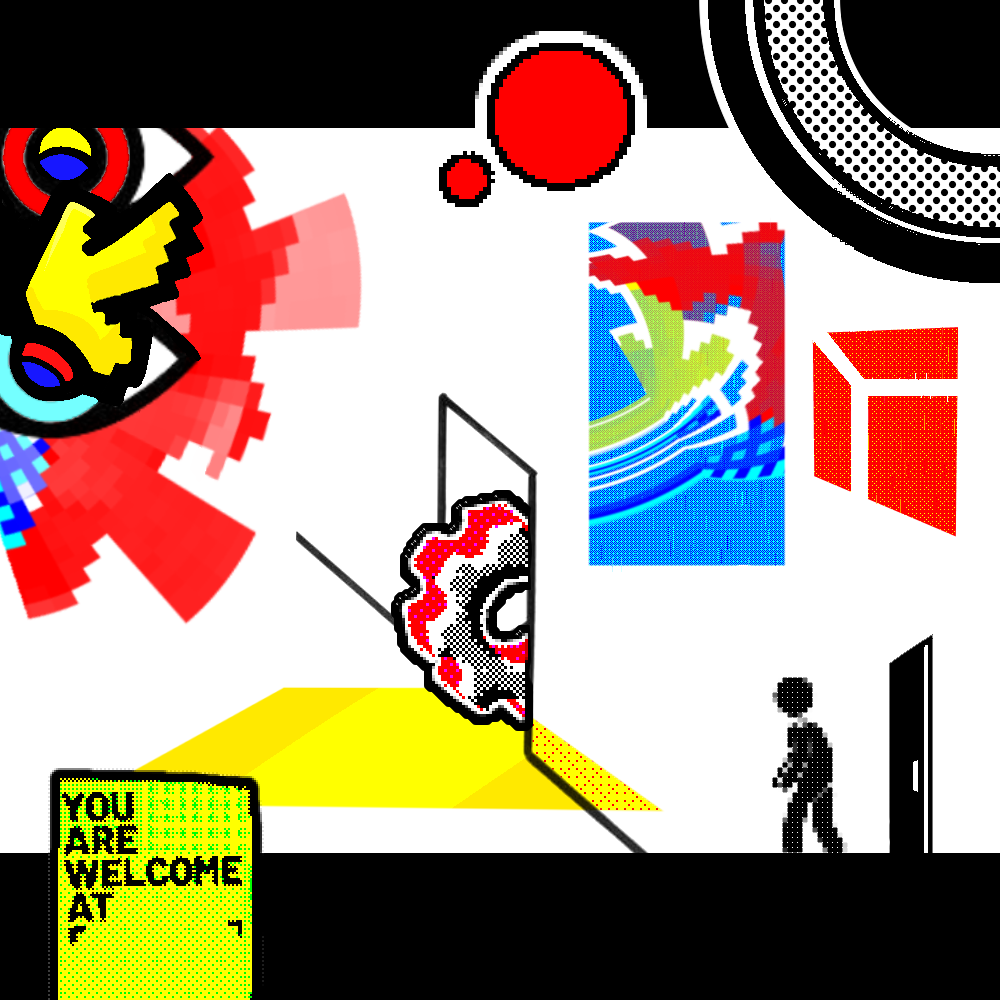
A collision between a specific scientific visitor center and internet memory: machinery and wall art as abstract shapes, filtered through Flash-era interfaces, browser-game aesthetics and early digital culture.
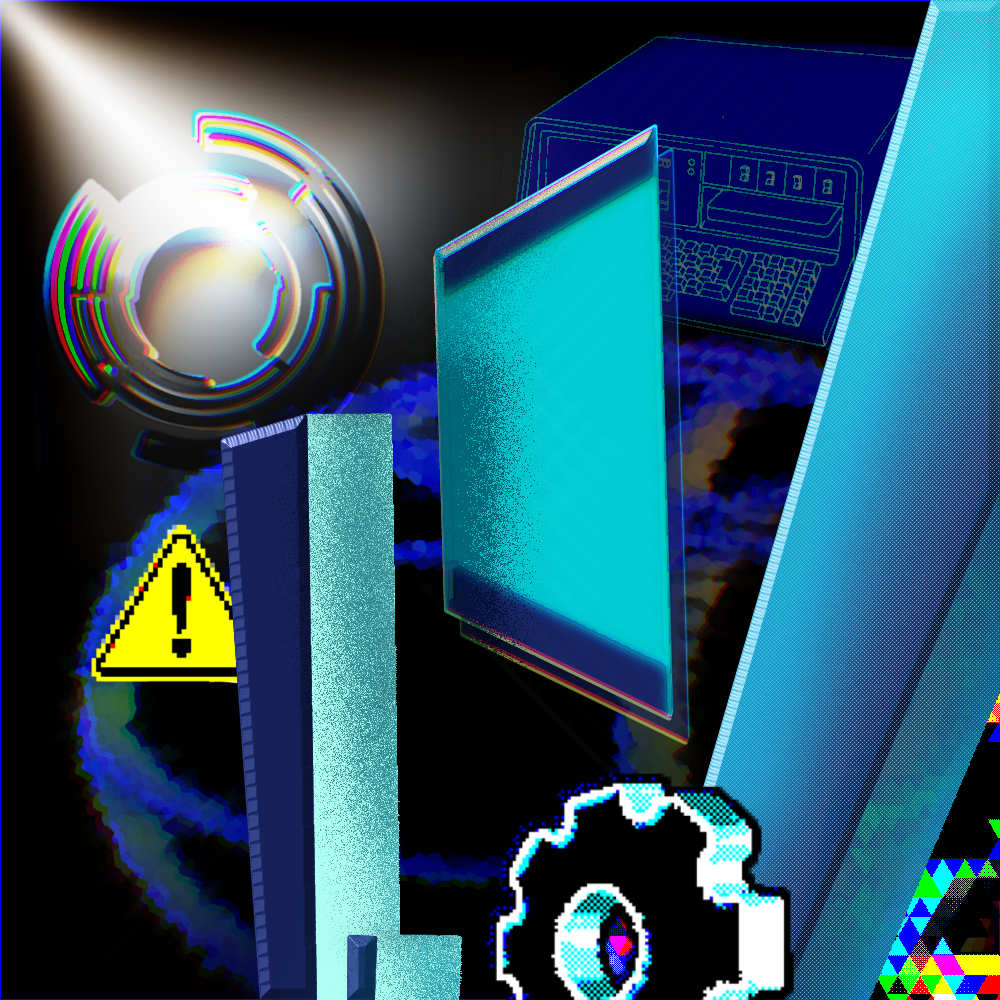
Built from the visual language of early operating systems, device manuals and obsolete computing hardware, the work layers Windows 95-era interfaces, machine panels and digital artifacts into a WWW-esque environment.
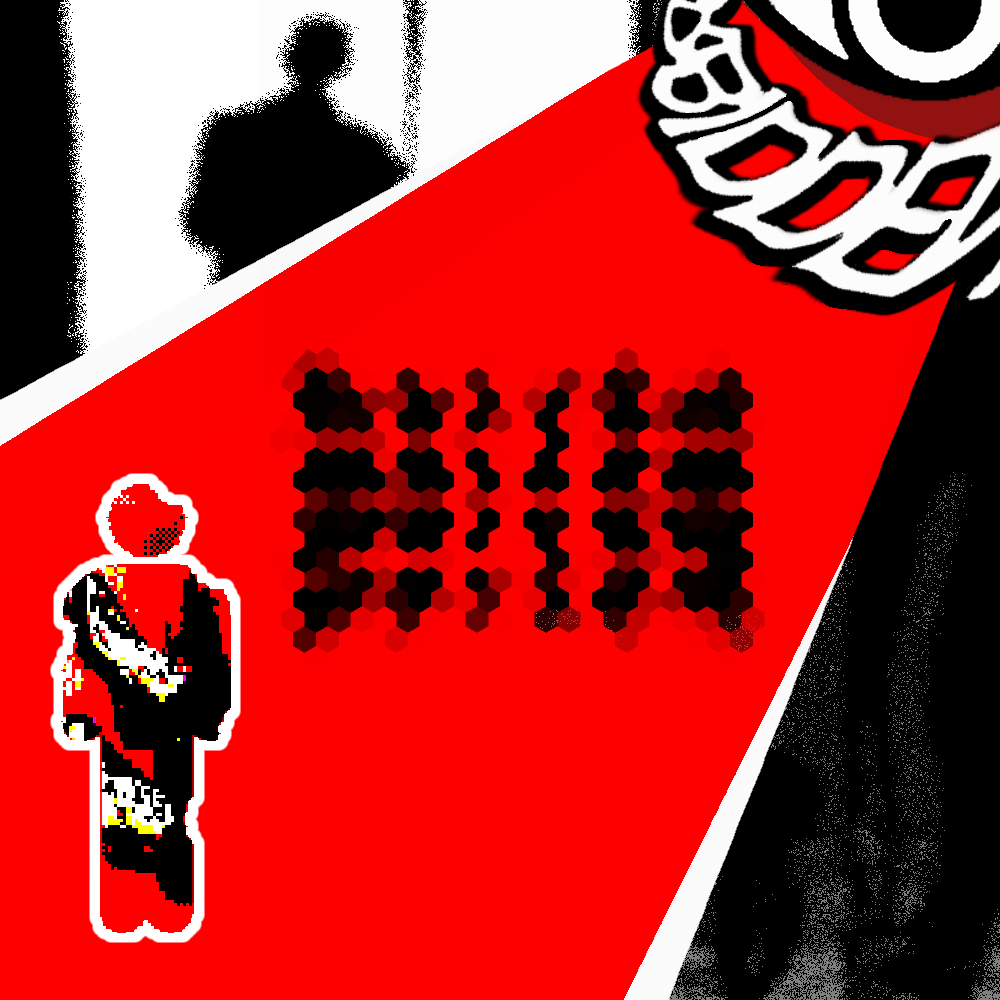
Red-black signal architecture with distorted language and institutional imagery, as compliance becomes part of the atmosphere.
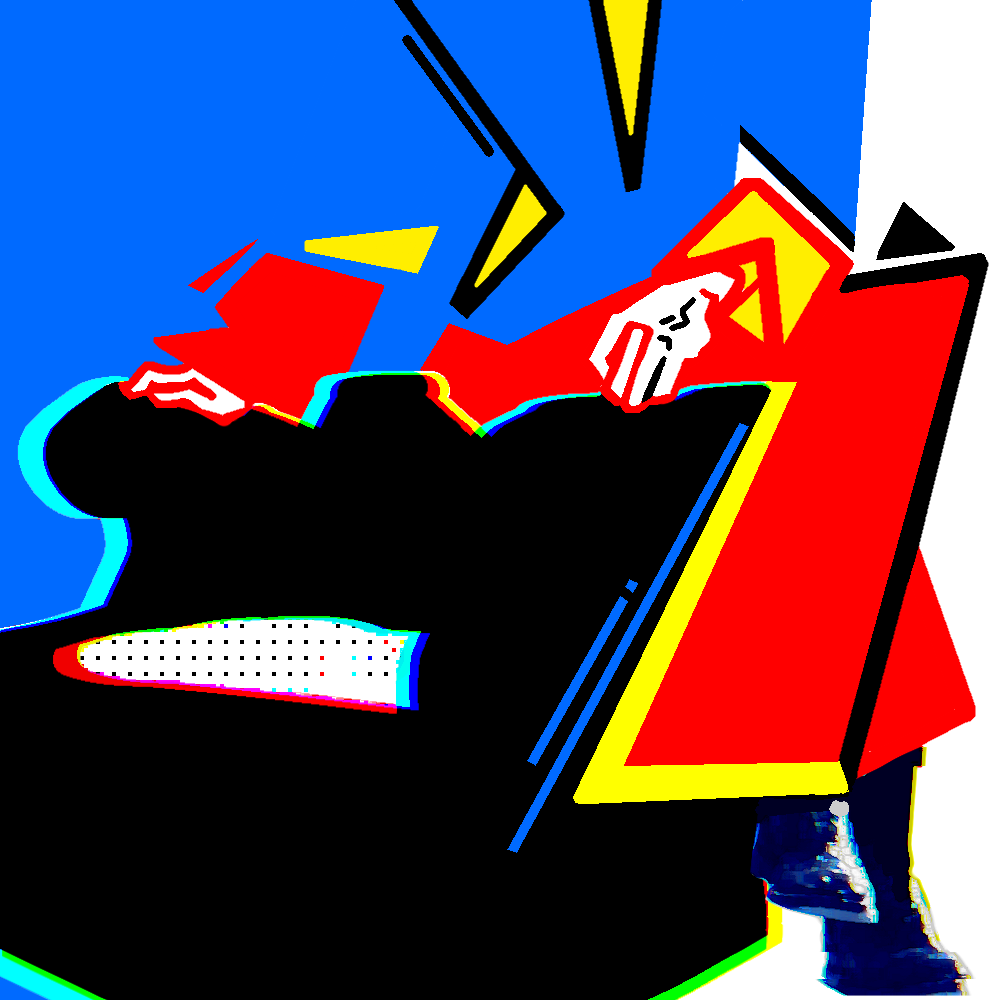
A gesture study in primary colors.
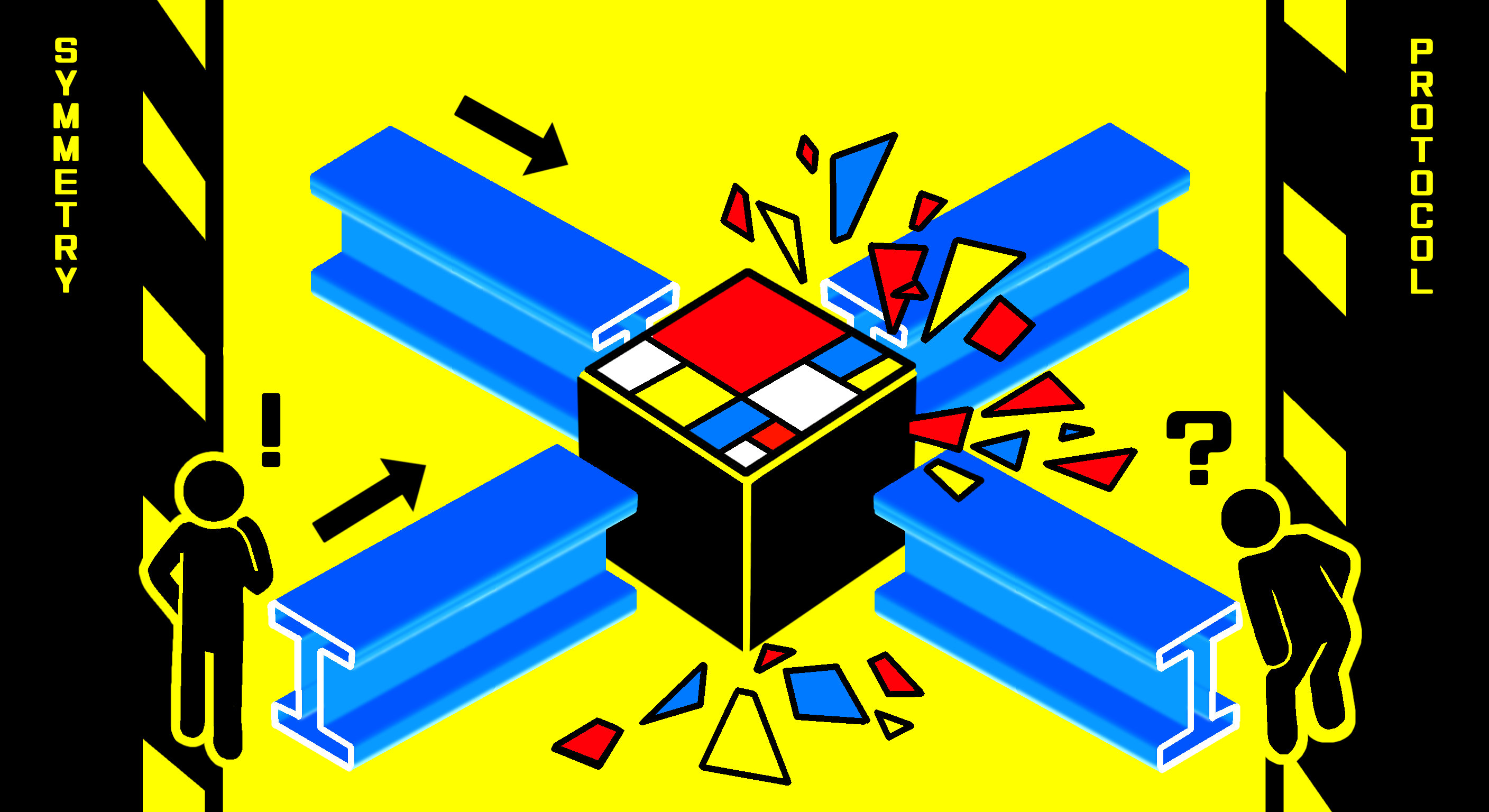
'Would you observe time from many points?' A safety manual for a controlled system failure (or an art movement subversion). Time freezes at the point of impact, a moment of pure discovery inside the failed collision. The figures remain calm and present in this user manual, as the "logic core" shatters. A protocol for learning. De Stijl breaks into simpler pieces to be understood.
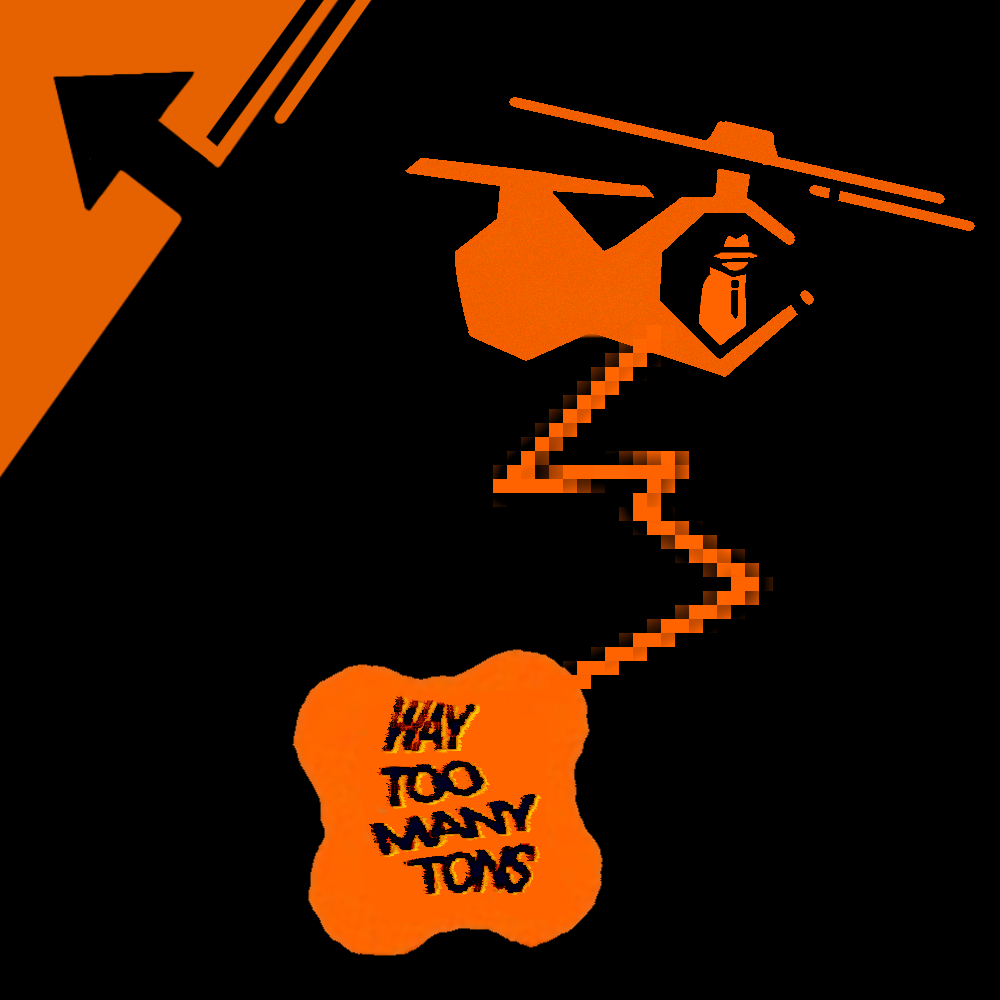
Built from the visual memory of early online Flash games, the work follows an incognito figure controlling a helicopter, weighted down, through a simple orange-colored landscape to reach the end flag.
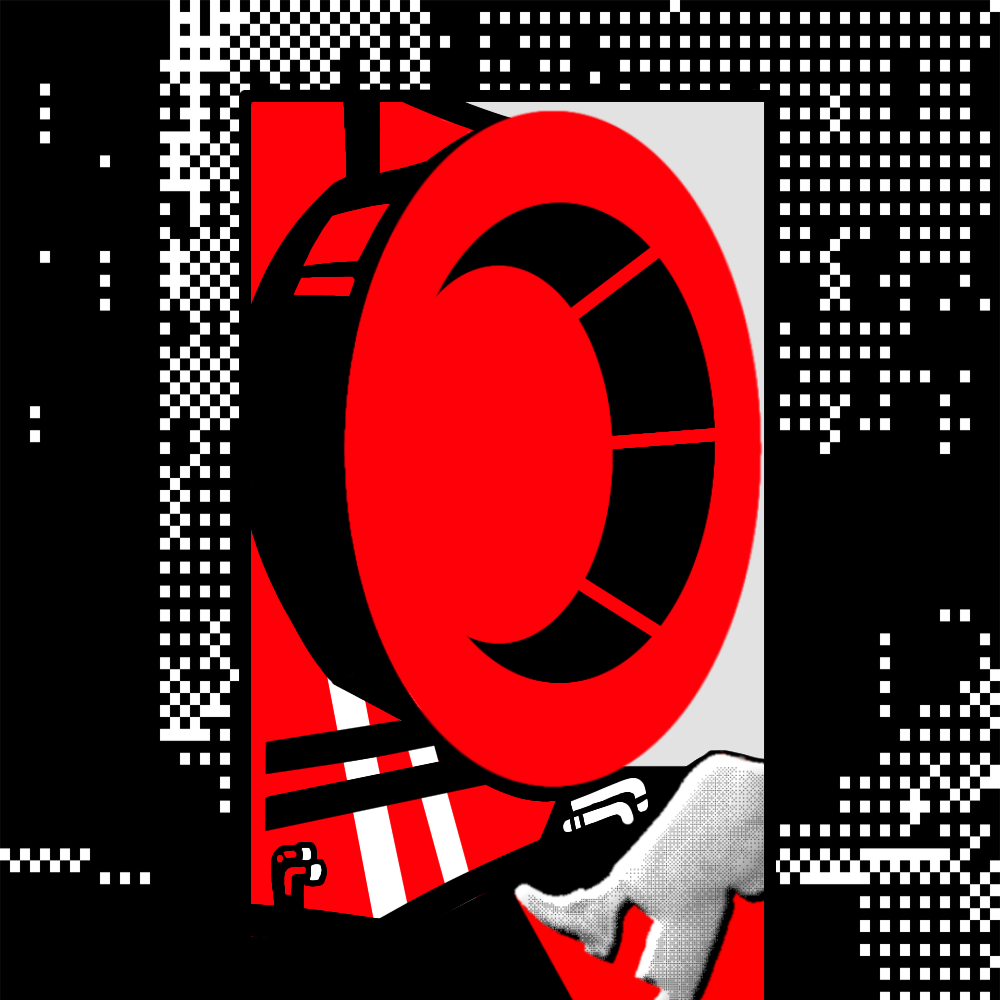
Drawing from "Mensch-Maschine" visual influence, the composition merges human presence with red-black mechanical fragments of the most well-known scientific collision system. A double entendre: Rot (Red) and the rotation of the machine.
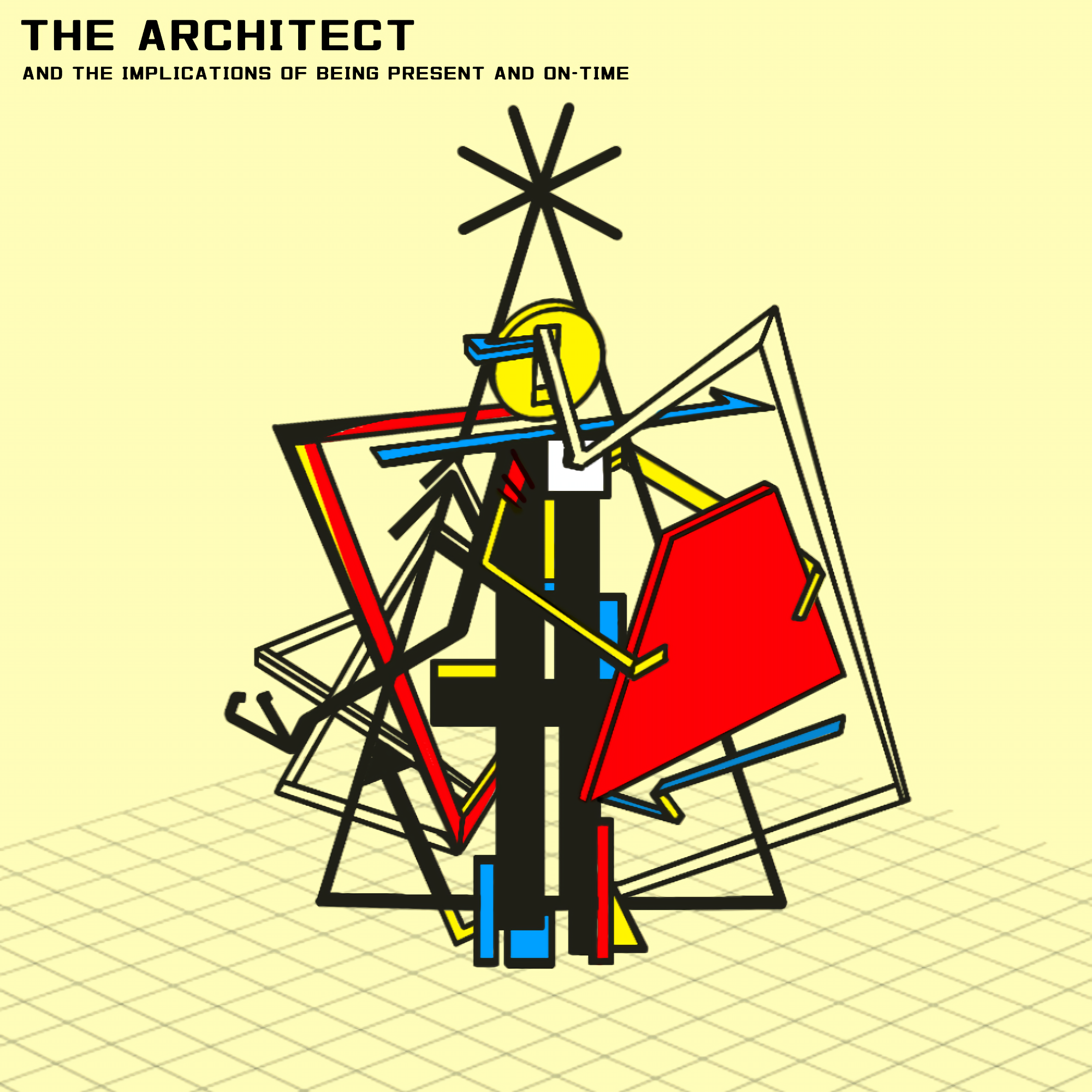
De Stijl on the axis grids (see diagonals of Theo van Doesburg) and influences from "Apparatus and Hand". "The Architect" represents the internal labor of this Myers-Briggs persona: a high-pressure structure of logic where every component must be precise for the system to stand. A search for harmony not in static, but in 3D grid.
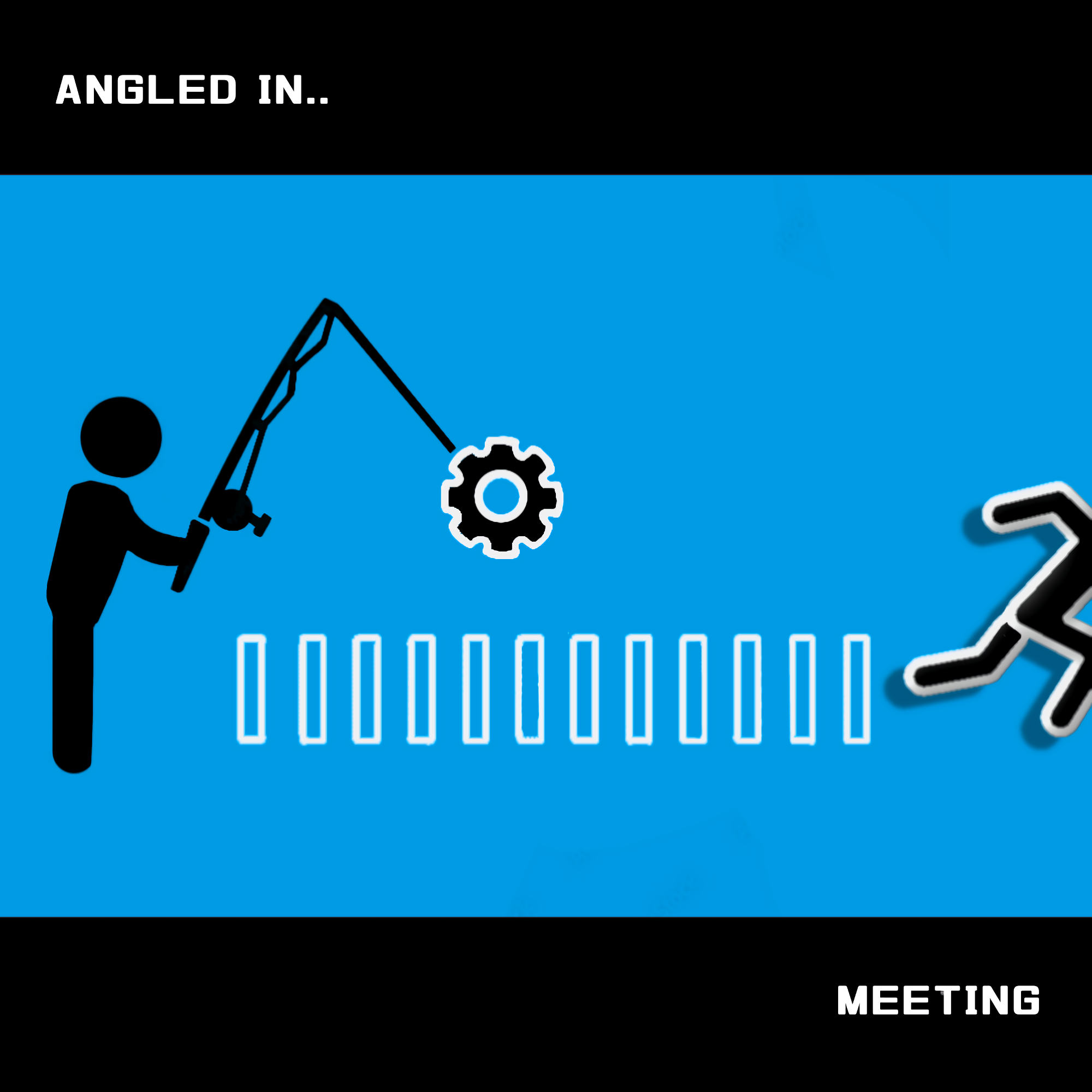
A study in Social Game Theory and the mechanics of engagement, through the EBM lens. Using the gear as a "mechanical lure," the work depicts the calculated asymmetry of connection. The ways of "angling in" toward collaboration while misintrepreting social interaction.
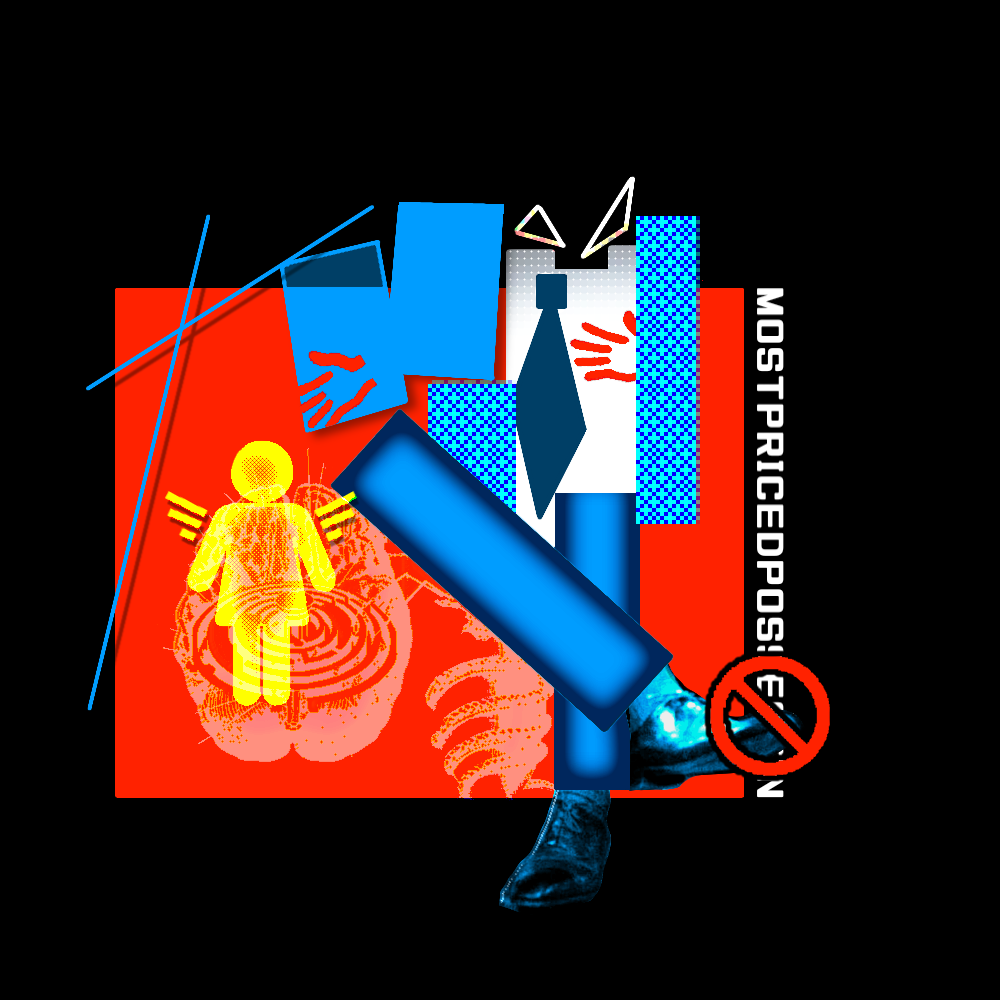
A study of clinical and personal asymmetric coercive power, mirroring the forced dynamic of Klimt’s The Kiss. Mapping (1) knowledge as containment, (2) showcasing the "success", (3) the Skinnerbox and (4) suppressed impulses, this work depicts a closed system of possession. The lounging figure’s pride trades the heart for a diagnosis: the "light" is finally understood, but that understanding becomes the cage.
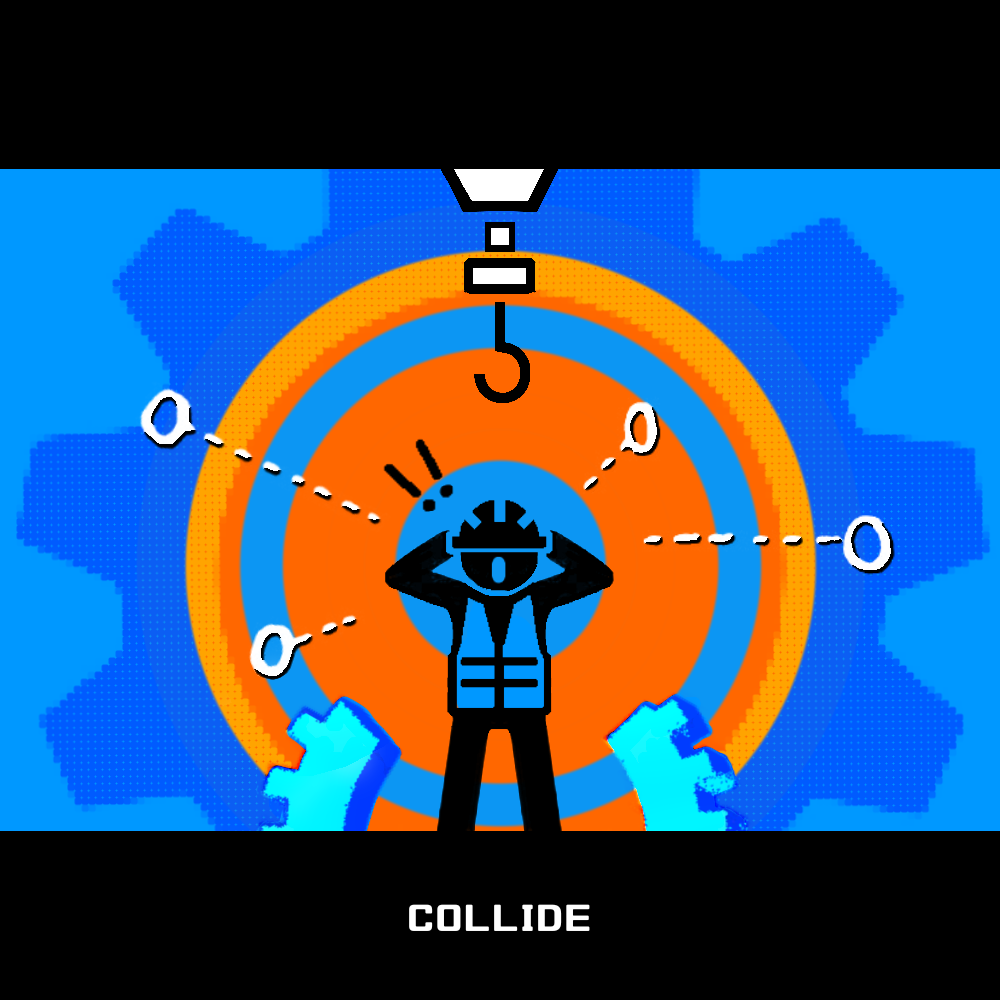
Inspired by particle colliders and pictogram user guides, with mixed media of particle scientific illustrations, the composition places a worker at the center of converging trajectories, machinery and impact zones. Human presence becomes part of the collision itself, powering discovery (and following warnings, especially in danger zones).
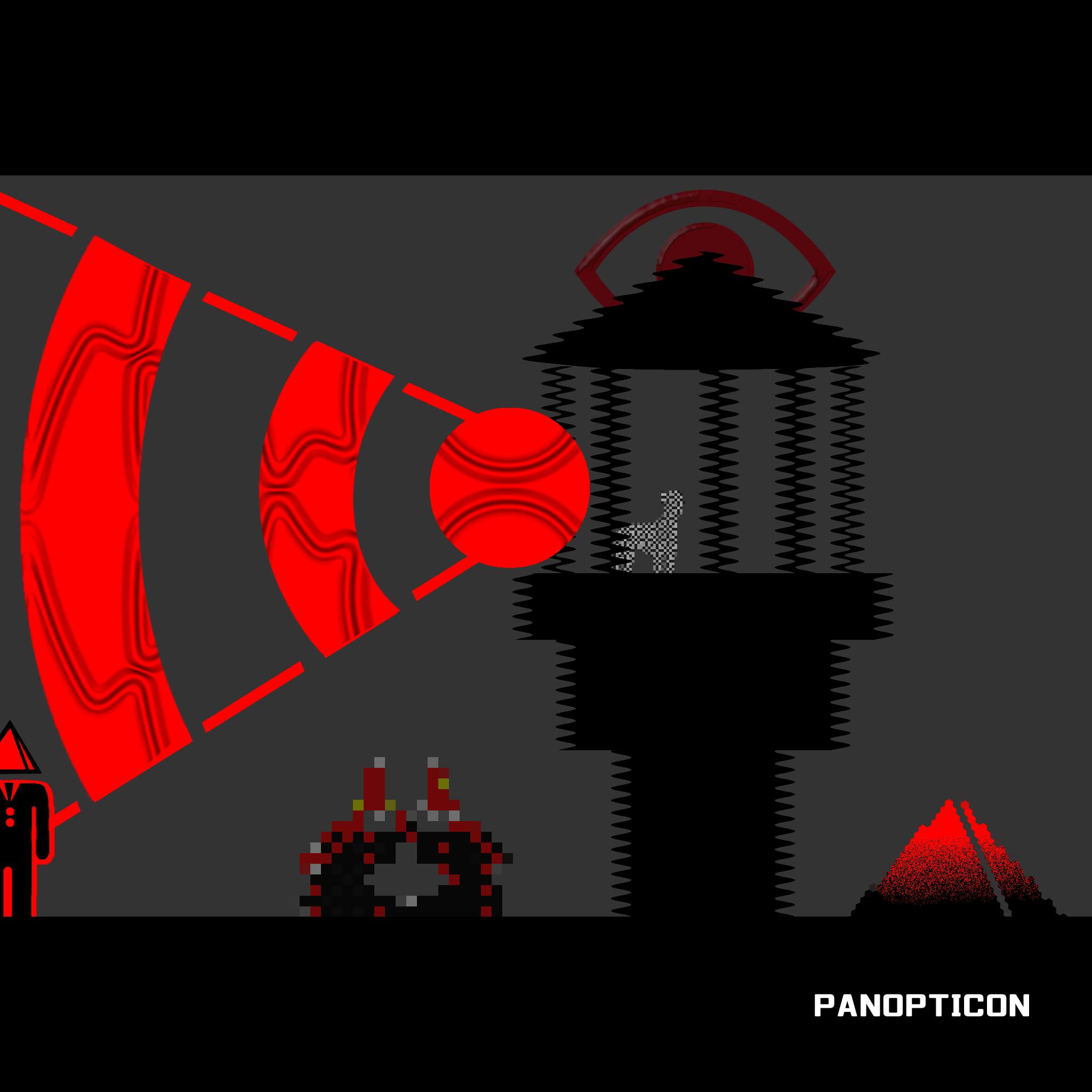
'Two-bears-indeed-high-fiving', right under the panopticon. Part of my 'Kunstmusik' collection and visibly inspired by existing albums, this work visualizes the observer's landscape through psychology, inkblots, the 'pleasure principle', normality and mixed media of doctoral book imagery. Being the watching dog in a world where you cannot participate in, but only look from above. Clinical detachment of a 'greyhound' looking for all its life from the tower, understanding that looking at the system is the only proxy for knowing how it feels.
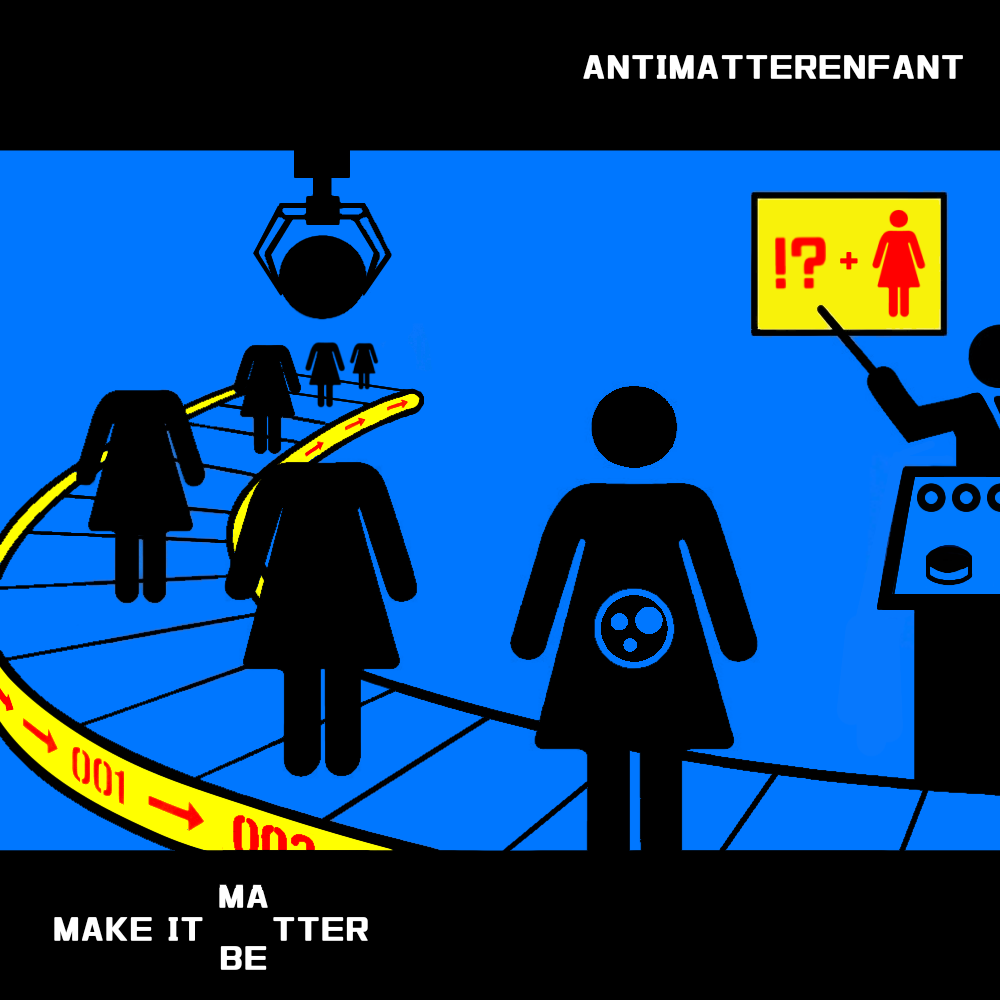
Behold the machine: the first entry in my 'Kunstmusik' collection. It is the sound of a music factory powering up, where man becomes a gear in the production line. Inspired by And One, with influences from EBM, synthpop and industrial music, this piece reveals the mechanical pulse of rhythm and runs the assembly line of modern music culture.
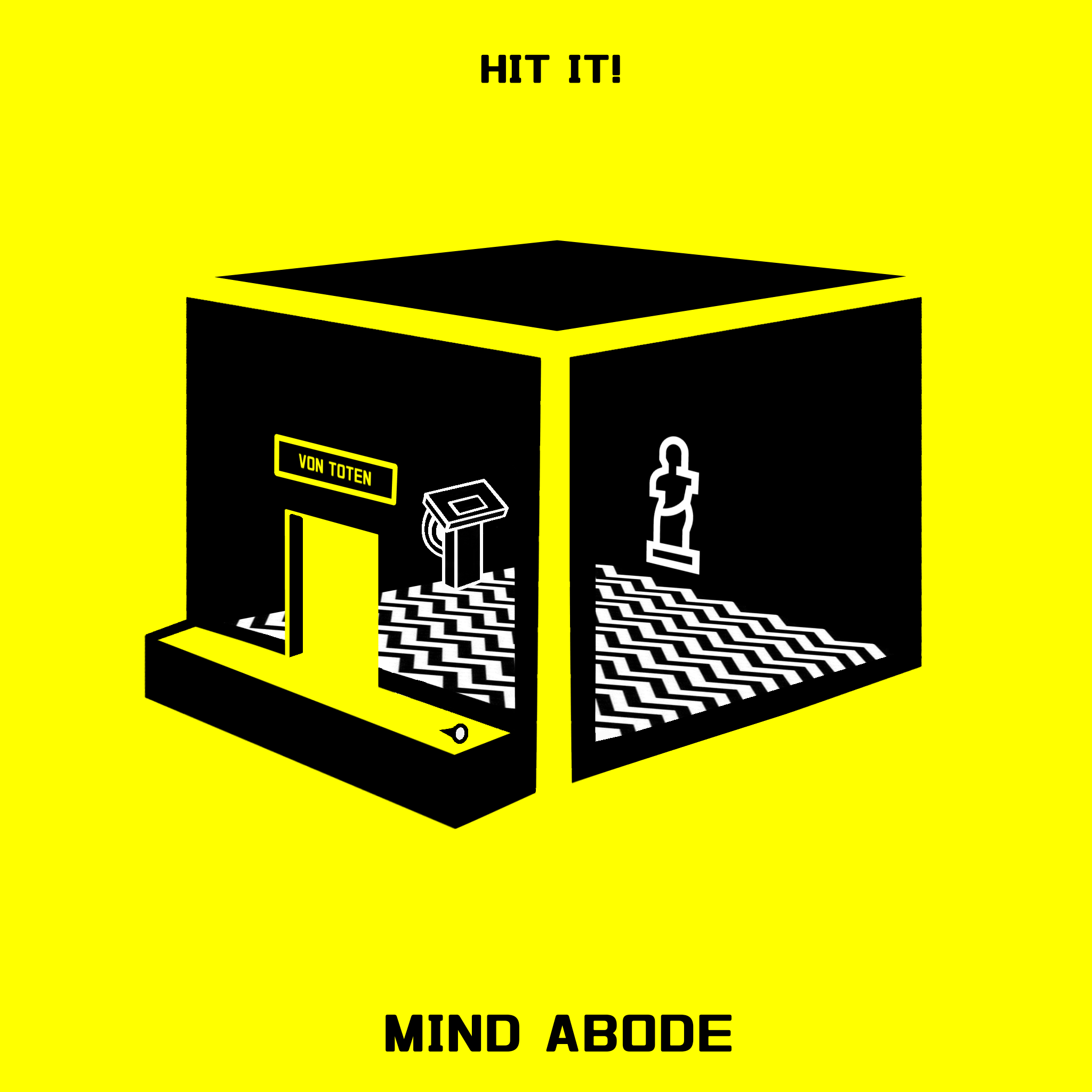
An Architect’s interior landscape and safe room, filled with mind puzzles in all forms, from early internet flash media to enigmatic series and songs. Inside, atop the chevron floor of the Black Lodge, sits the creation machine: a terminal where one types commands and hits buttons, typing words that manifest life or items. The 'private life' of an organized, hyper-active mind that has become a self-imposed cage. It is the Architect’s ultimate paradox: a sanctuary built of puzzles and protocol, broadcasting a silent and desperate challenge: "If you can find me, come and get me out of here."
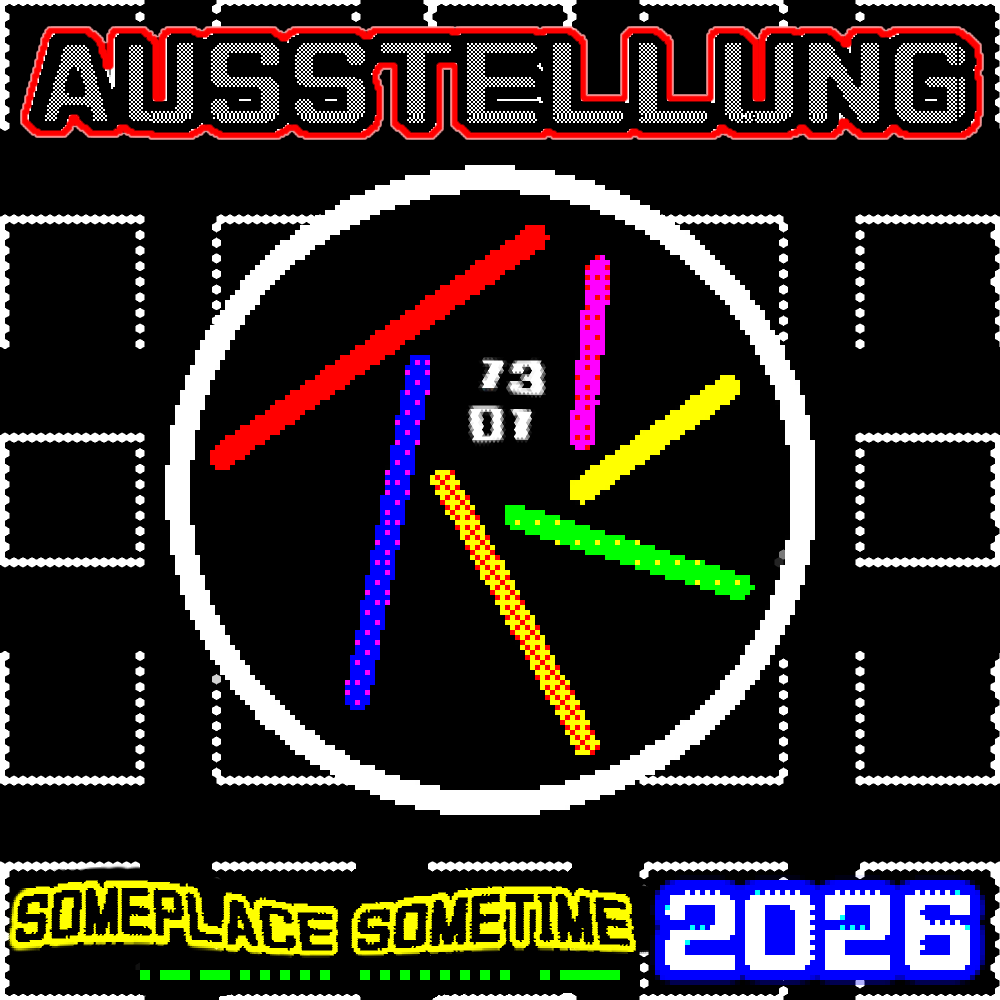
An art exhibition that will happen soon. My Ausstellung. Your Ausstellung. It is upcoming. 'When?', 'By whom?', 'Where?'. Doesn't matter. Let's celebrate. It's 13/01. It's dadaism. Fin. (Imagery influenced by "Sounds of the Universe")
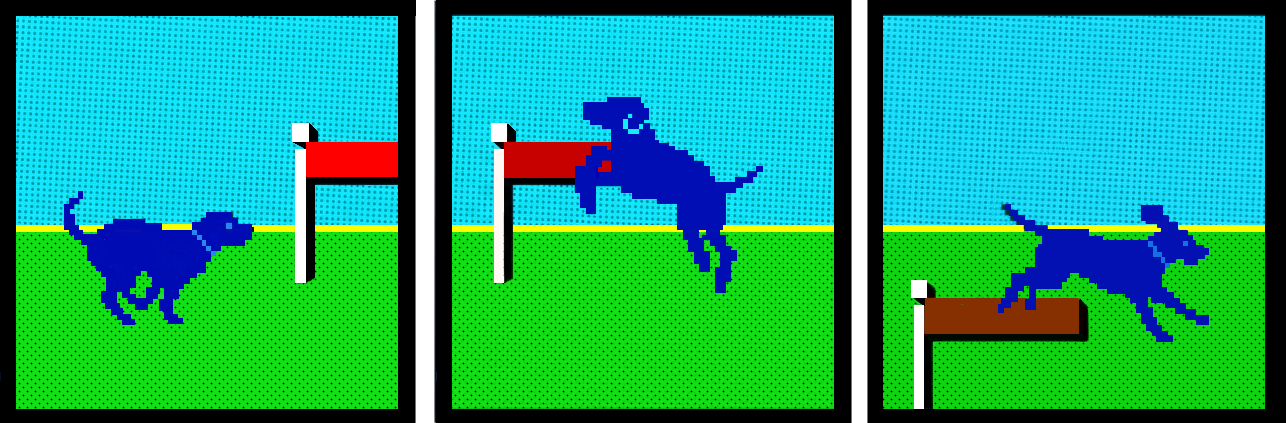
A simple story of progression (depicted through a cherished personal symbol): moving from being stuck to being free. This painting is a "reboot", before the audience is introduced to the following paintings of unpredictable changes and being "mentally" stuck in traffic. Influenced by Francis Bacon's triptychs and the depiction of the same subject from different angles/instances. Based on 'learned helplessness,' it documents the moment the subject refuses to stay put.
HLF 13 · Heidelberg Castle
Collection of works: Heidelberg, Germany
CollectionCHAR/NGED
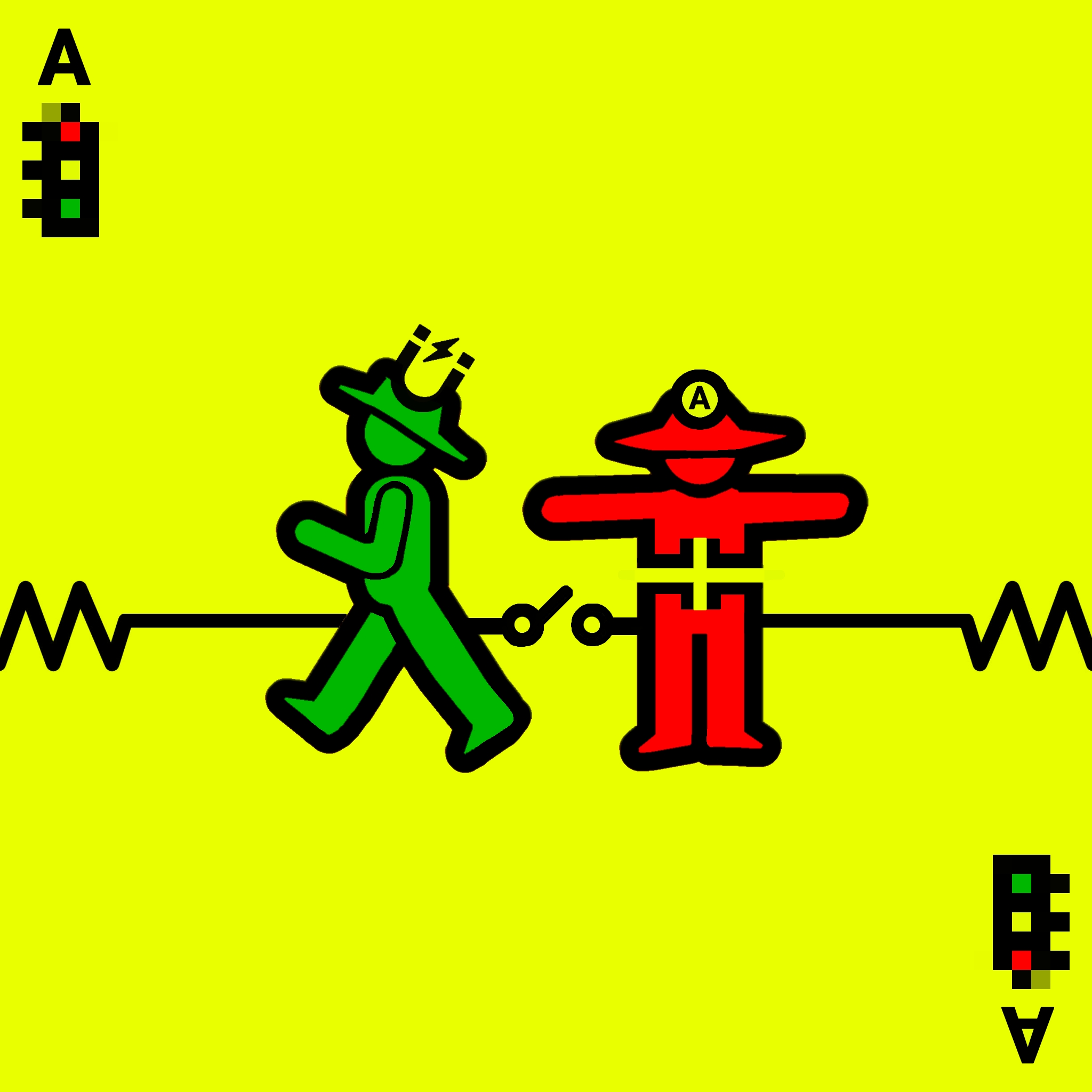
A visual pun on the Ampere (A), the measure of flow in a system. By reimagining the Ampelmännchen as an Ace card in a digital game of Solitaire, the piece highlights the solitary struggle of navigating a foreign system. Karl Peglau's Ampelmännchen call you to face yourself within the internal traffic. It captures the paradox of the "integrated" outsider: you speak the language of the grid, you follow the signals of the internal traffic, but you stand out as a different frequency. You are the current flowing through a land that is not your own, seeking the continuity of a 'perfect world' while existing as a sudden (but wonderful) change in the system.
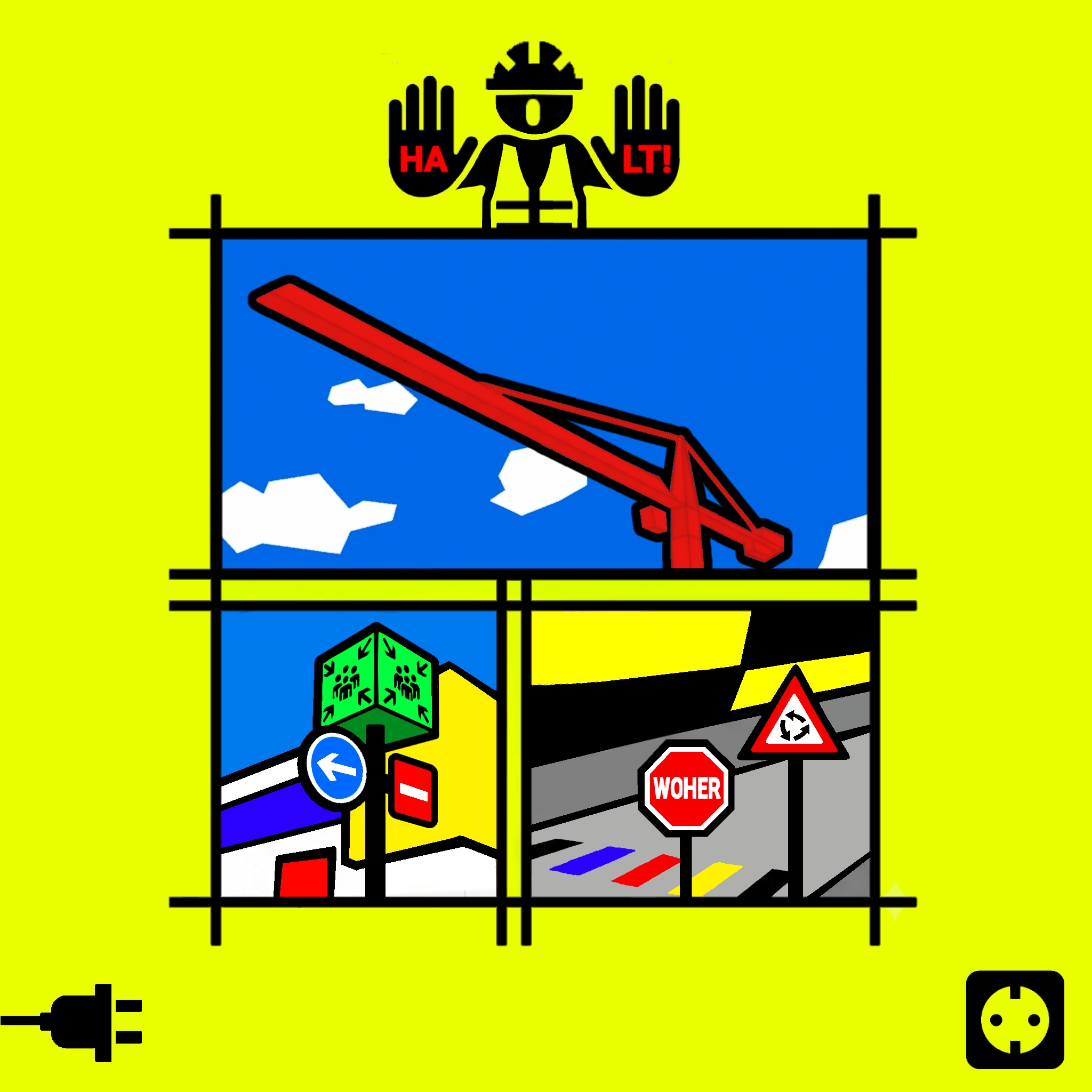
Drawing from the industrial aesthetic of Depeche Mode’s Music for the Masses, this piece transforms "mundane" scenery of my daily life, window views and worksites, into self-reflection. As part of a series on electricity and systemic connection, it uses the Lima flag to recall a time of a disease that made us stay indoors and question ourselves before everything else. It is a visual 'HALT'. The figure calls you to stop and think, before you try to imitate, you should try to embrace. Amidst the wires and worksites, it asks three vital questions: Who are you? Where are you from? And are you ready to connect to an unconnected world?
Featured
Toggle switch
"Here is the house / Where it all happens"
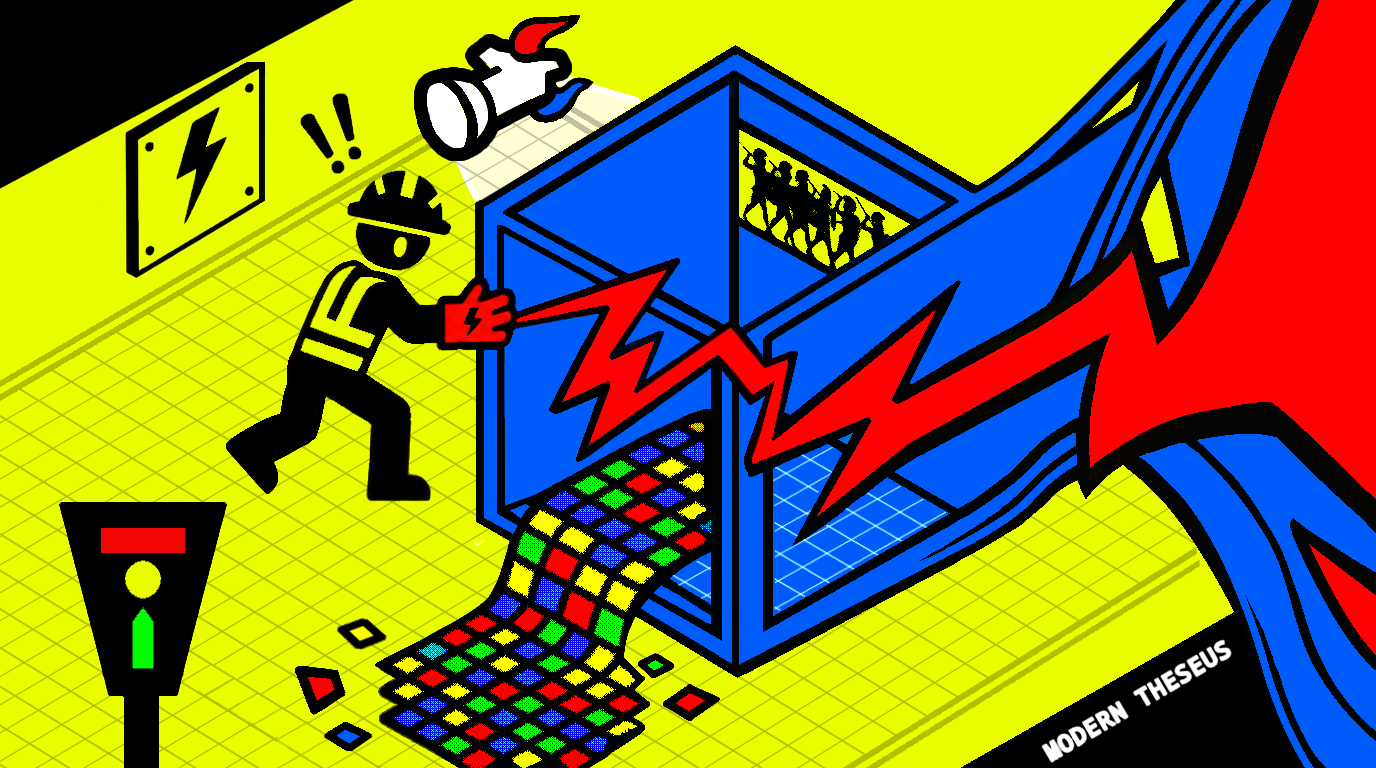
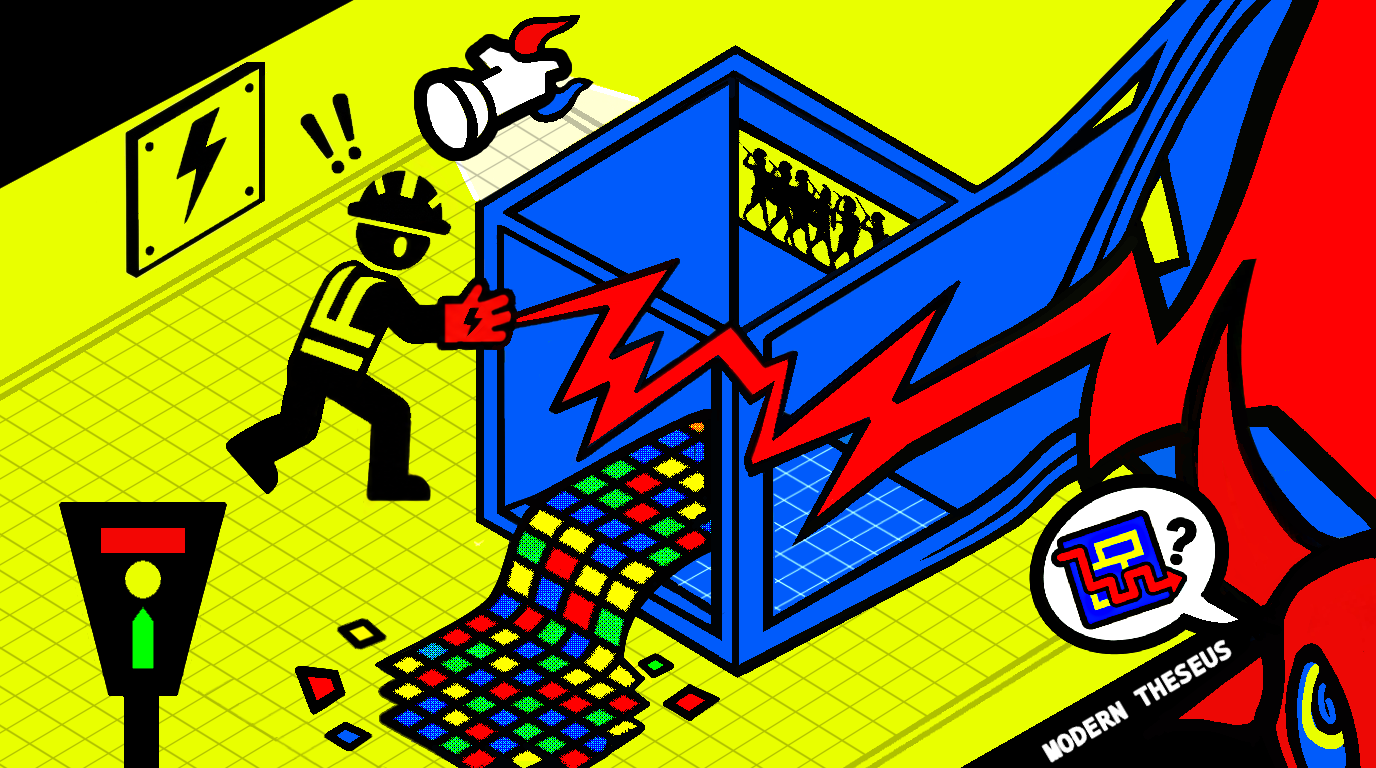
Featured at the 13th HLF, this work reimagines "home" as an ever-shifting blue labyrinth, constantly and unpredictably changing. Inspired by the novel 'House of Leaves' and Deftones’ song from the White Pony album, "Change (In the House of Flies)," the structure acts as a psyche shifting from within. The call is coming from inside the HOUSE. As a "Modern Theseus" navigates the chaos, embedded hoplites and a horned Minotaur show we cannot outrun our roots. A jagged lightning bolt serves as Ariadne’s thread and a spark of innovation, while pixelated memories spill from a digital Pandora’s box. Against this unstable architecture, Karl Peglau's 1961 traffic signals stand as fragile and heroic symbols of order.
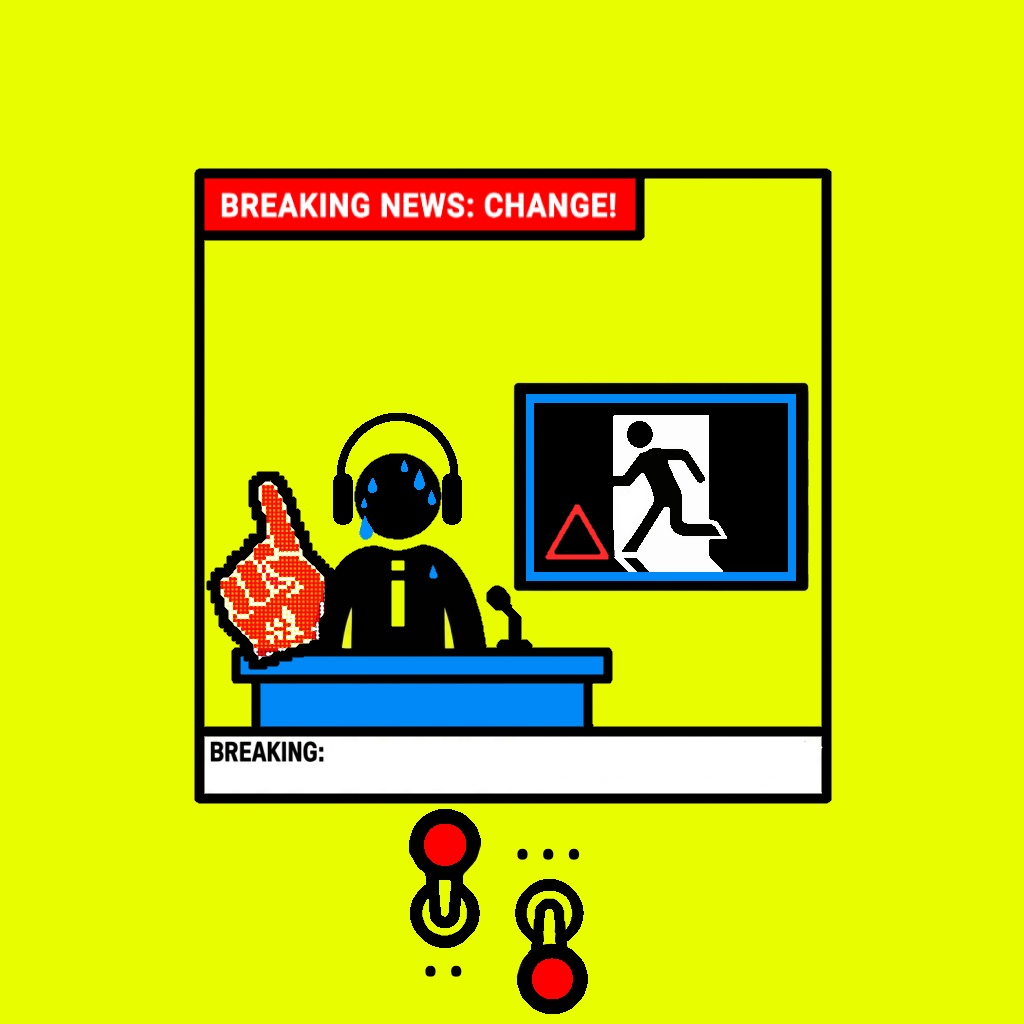
This work centers on change as a high-pressure and televised crisis. The title is a deliberate wordplay and broken translation at the same time: a literal "Sport-man-ship", mocking the awkward friction of trying to perform as a "team player" in an ever-changing system. When every news report looks identical, change becomes a source of terror. As the anchor sweats through his routine, the game console controls at the bottom reveal the truth: the broadcast is a simulation. It is a game where you get to flip the switch.
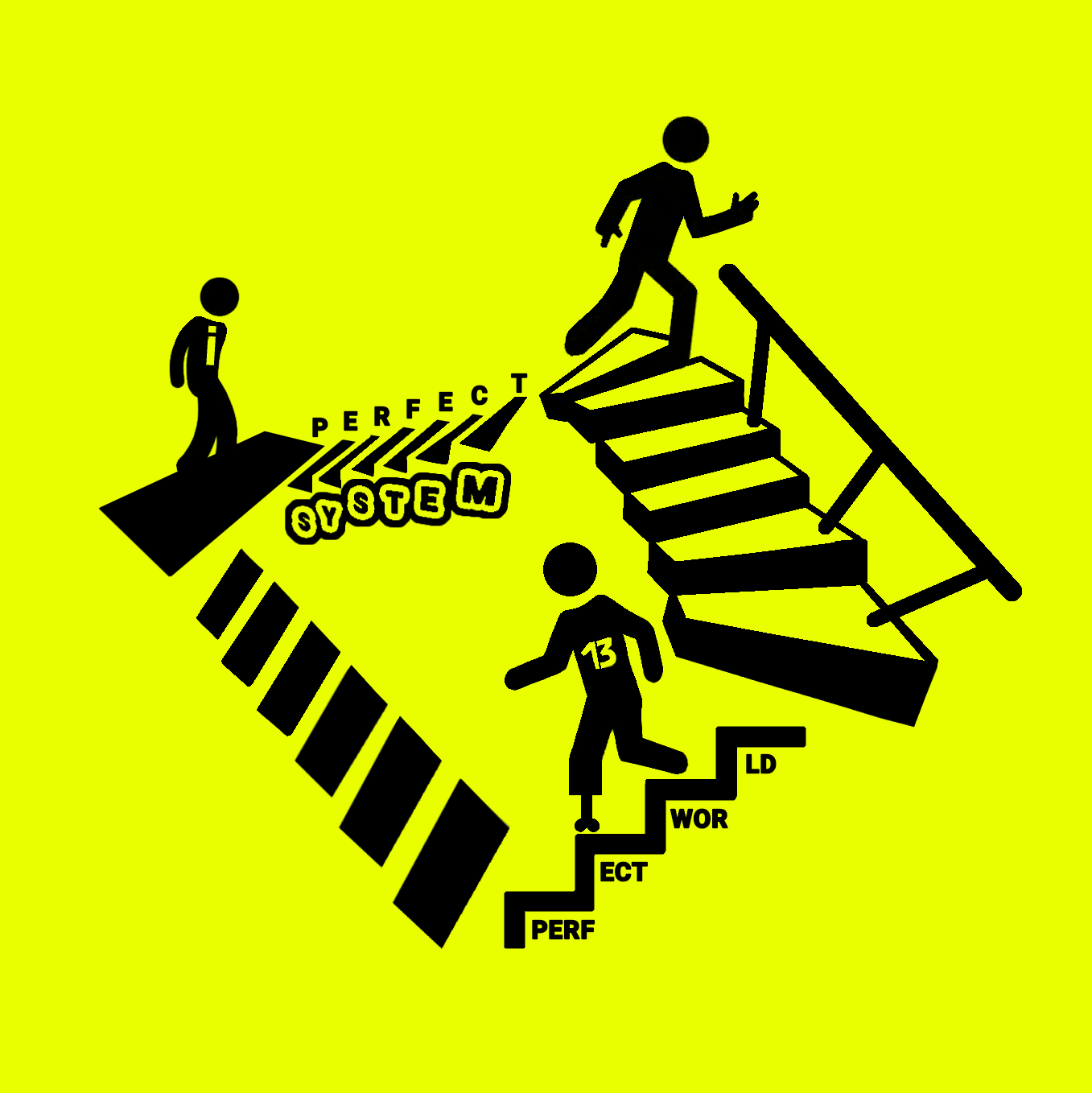
Closing the collection, this piece shifts away from bright colors to transform the sanctuary of home into a live wire of Skinner's operant conditioning. Drawing on the impossible geometry of Escher, the safety of the house is now a machine of "total continuity." The recurring triad of figures and symbols navigate a labyrinth where every stair leads back to the start. In this "Perfect System," where routine is regulation and nothing is real, the sanctuary has become the ever-changing cage. It asks the final question of the grid: in a world with no exit, how do you find a way out of the box? Is the box real?
HLF 13 / END
End of HLF worksWorks showcased at Heidelberg Castle
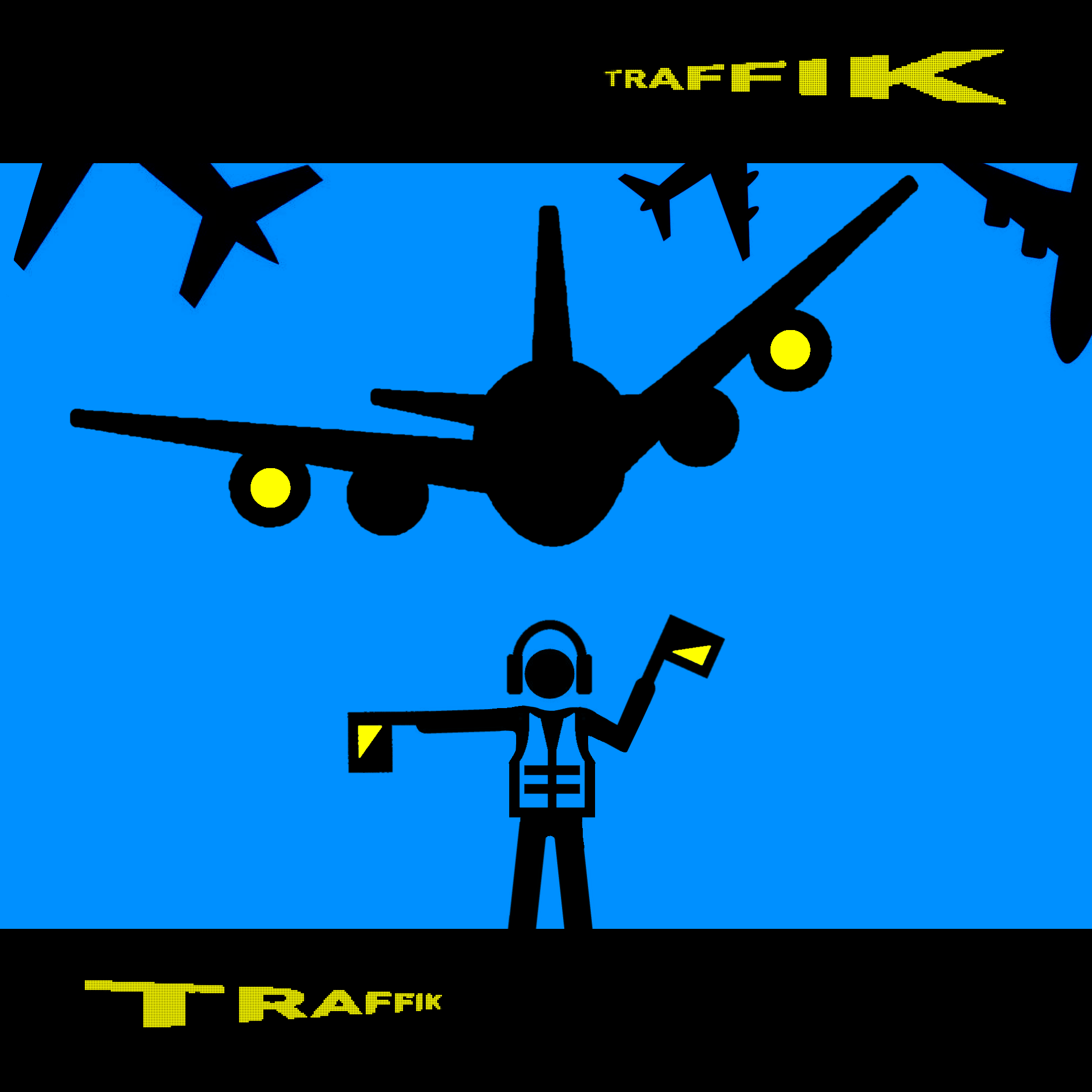
High above the tarmac, massive aircraft line up to obey a single ground marshal holding signals. No matter how powerful the machine, the plane simply follows its leader into the terminal (and his movements).
Part of a two-piece study on airports and "following the leader".
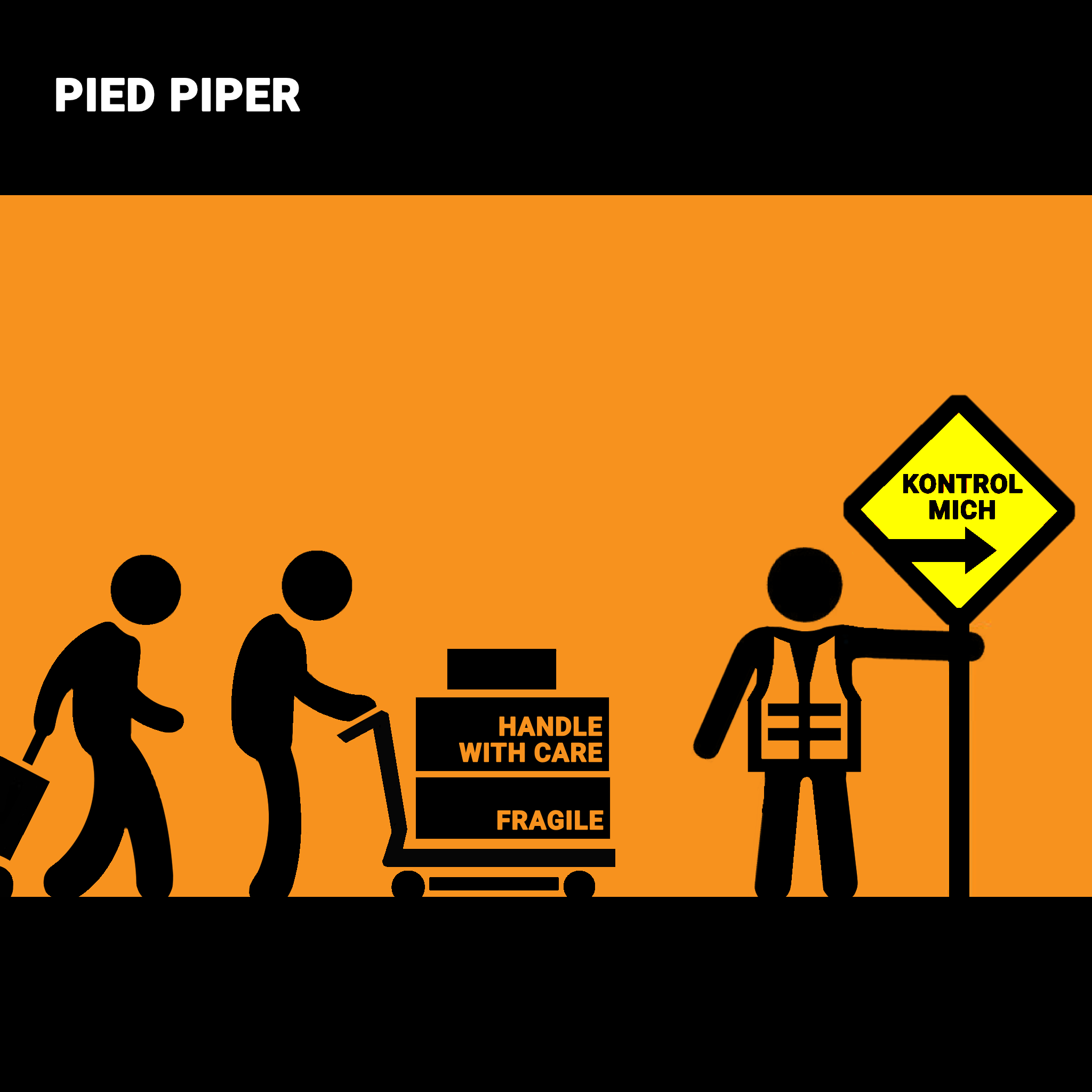
Down on the ground, the human chain takes over. Passengers and workers fall in line, carrying their fragile selves past a warning sign, blindly ordering and blindly following.
Part of a two-piece study on airports and "following the leader".
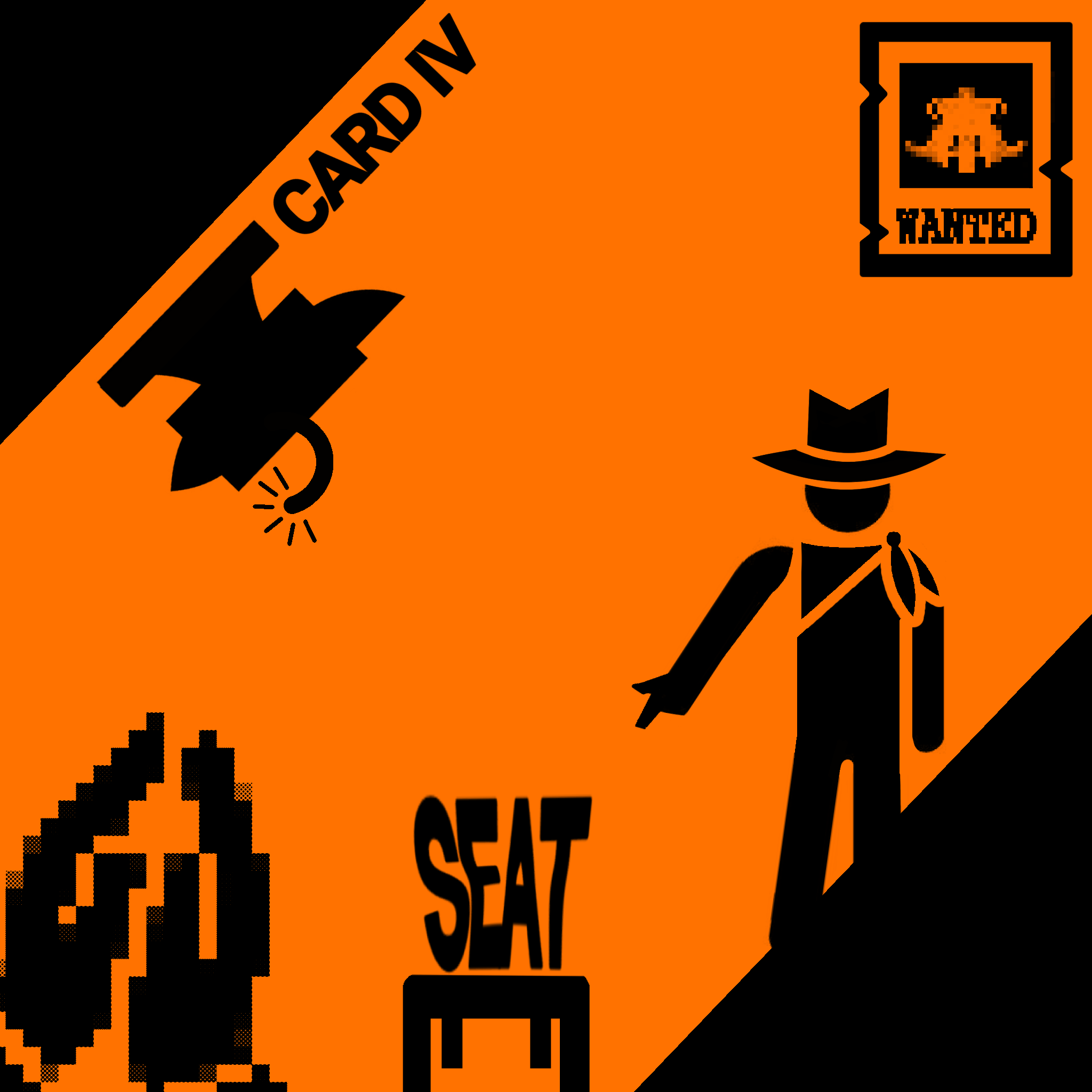
A direct confrontation with power and authority. The figure in points down, ordering you into a mandatory seat. Framed alongside Card IV (both the Tarot Emperor and the Rorschach masculine Card 4 inkblot) it turns simple interrogation into forced lack of choice.
A direct nod to René Magritte’s The Treachery of Images ("This is Not a Pipe"). Don't think too hard about it. If you already know, there's nothing left to contemplate. It is exactly what it says it is.
The dosimeter flashes. Something new. Something hopeful. The knowledge of the antimatter is within you. A glowing core pulsing beneath the skin while the cold assembly line hums around you.
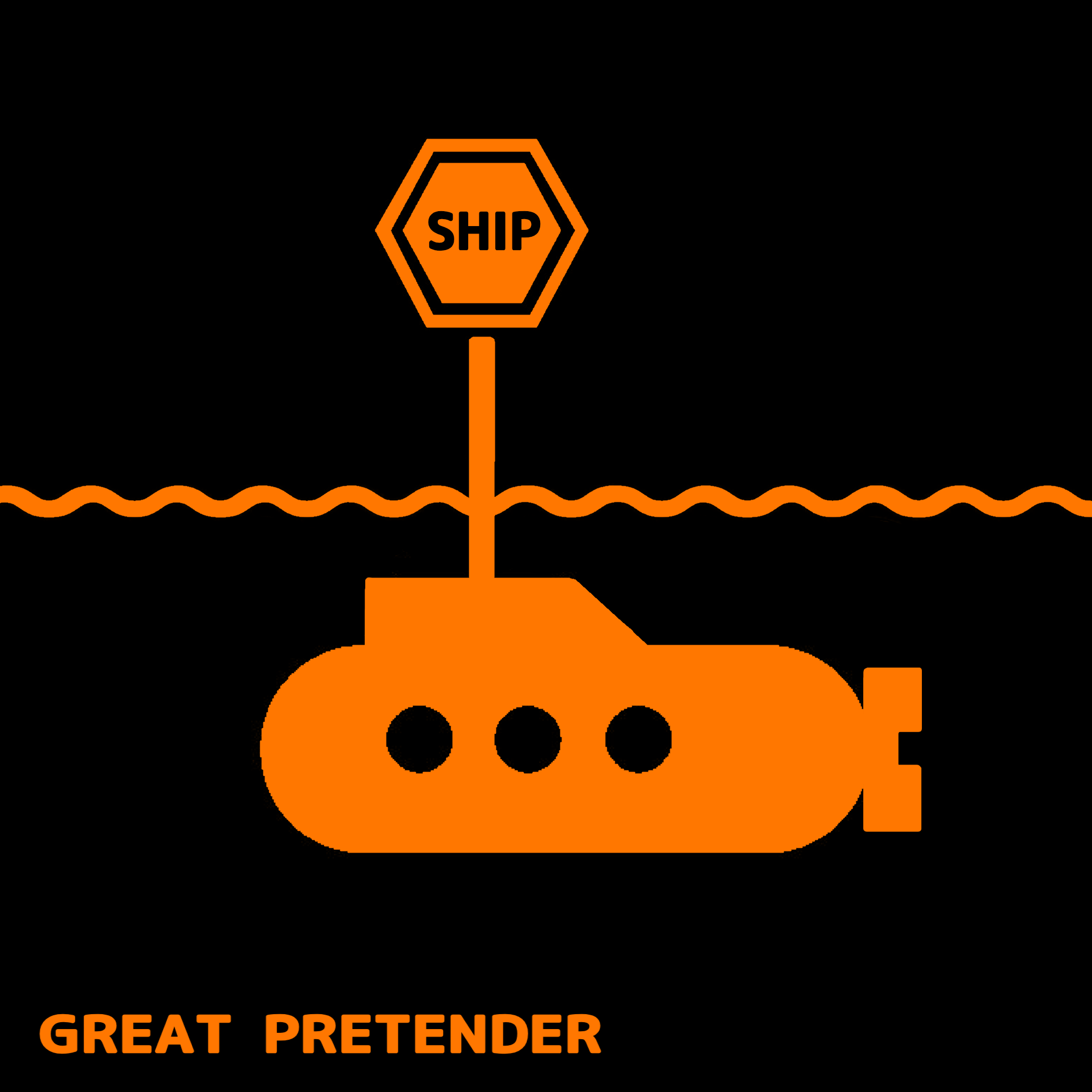
Sometimes staying hidden isn't about fear, it's about staying in control. By throwing up a dummy sign on the surface, you give the world a harmless target to focus on while you do the real work underwater in complete peace. This piece is inspired by EBM, specifically S.T.O.P. from And One.
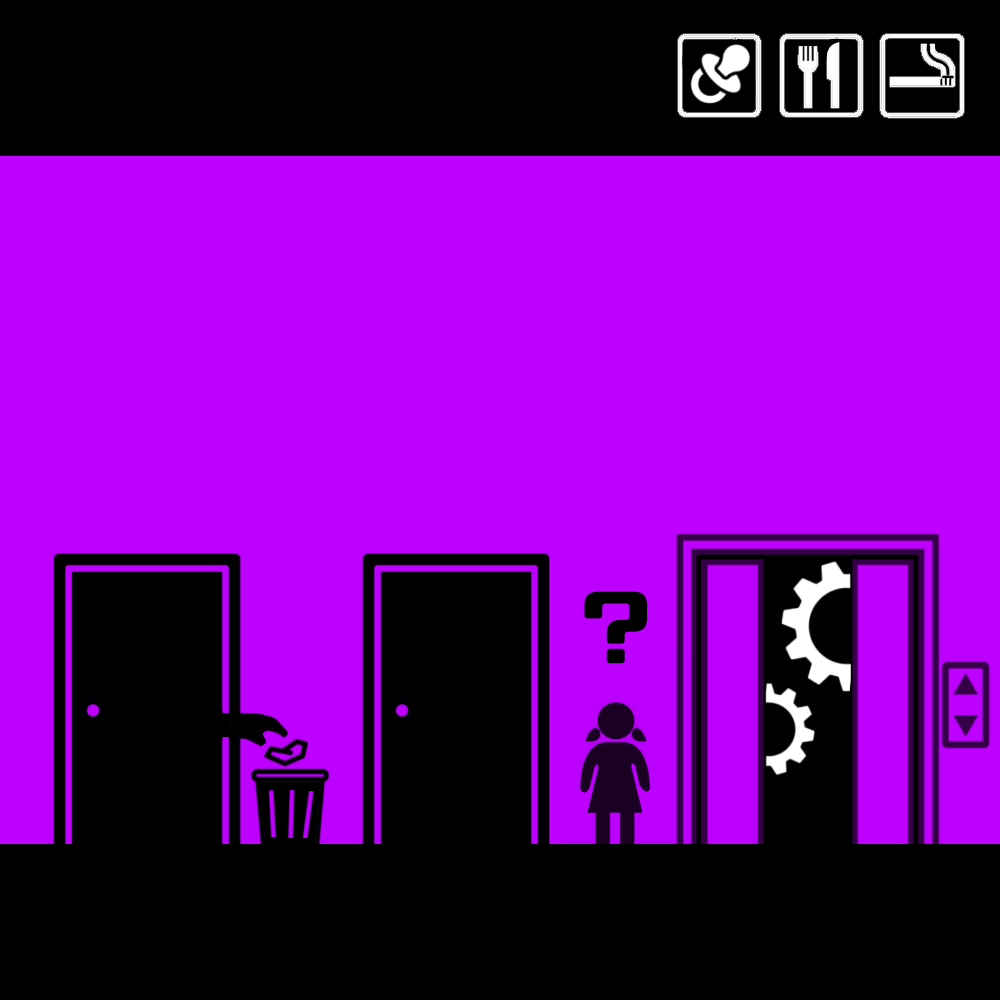
A search for a place to ground yourself when the noise gets too loud. Standing before unwelcoming doors and unknown elevators, the real question is: how do you take back control of your own adult mind?
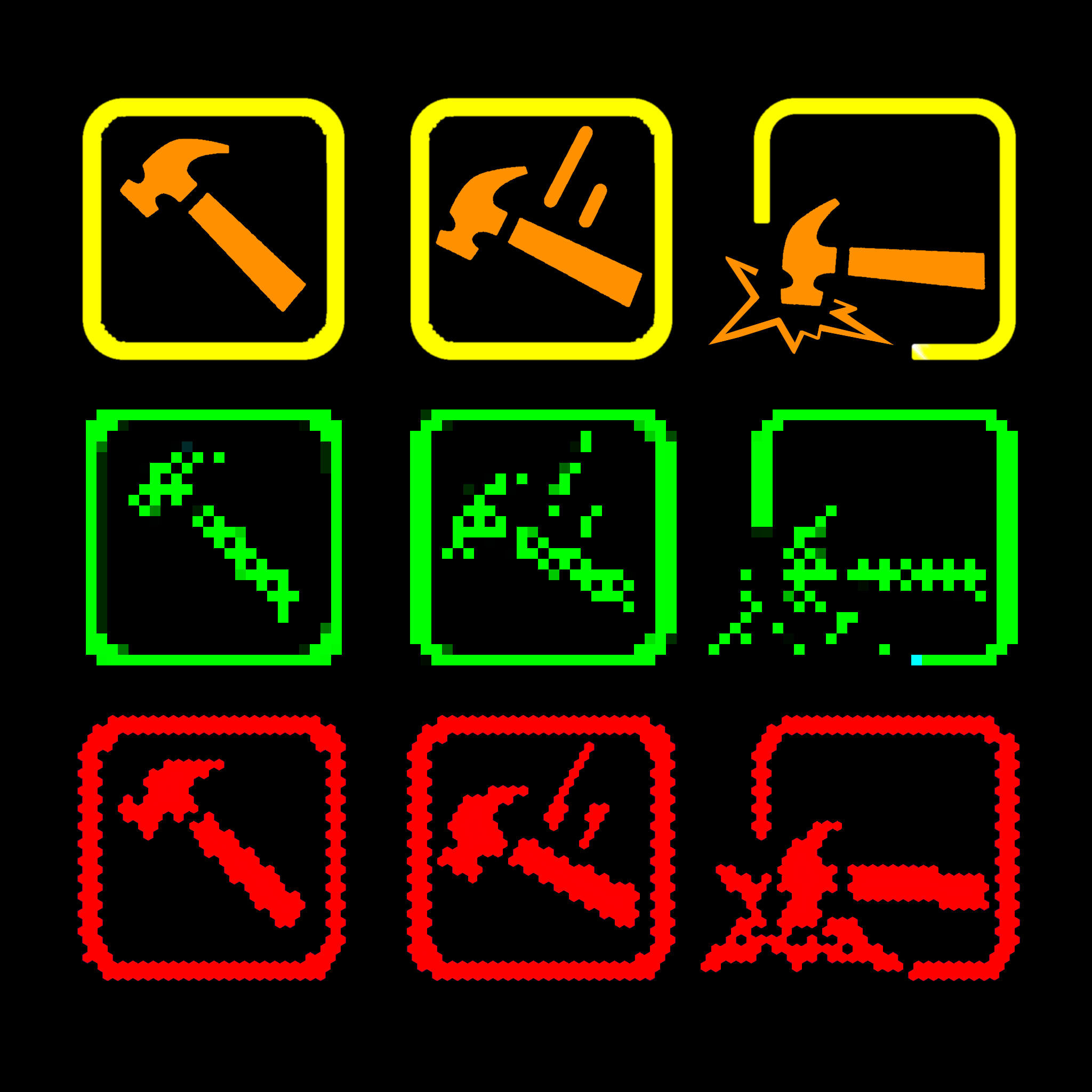
A metalhammer here, a metalhammer there.
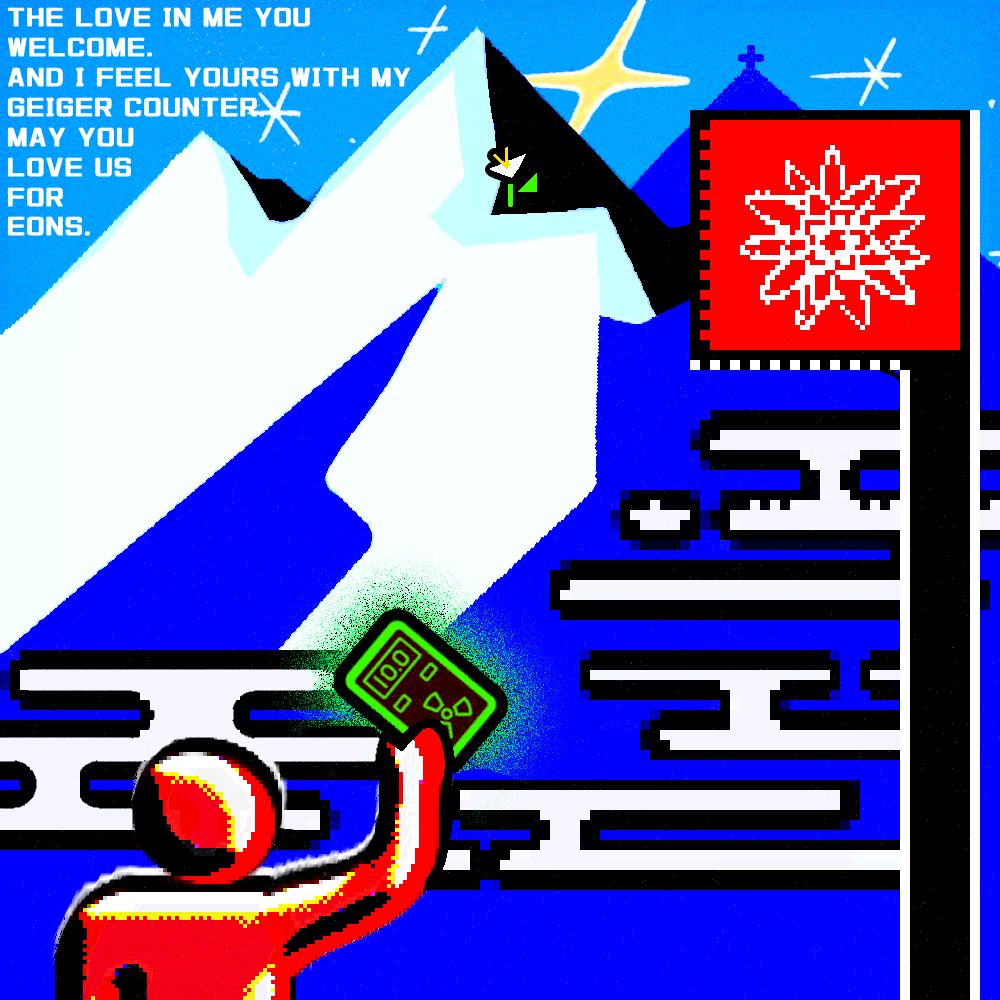
As the closing artwork to the Geneva Collection, this piece is a love letter of mutual respect between a scientist and Switzerland. The researcher raises a glowing Geiger counter as a gesture of alliance toward Geneva, while the Alps offer up an edelweiss in return. It reflects how the land and international minds welcome each other, keeping one another alive and safe, through a shared devotion to knowledge.
GENEVAEnd of Collection
KENSINGTON/LIVERPOOLNew Collection
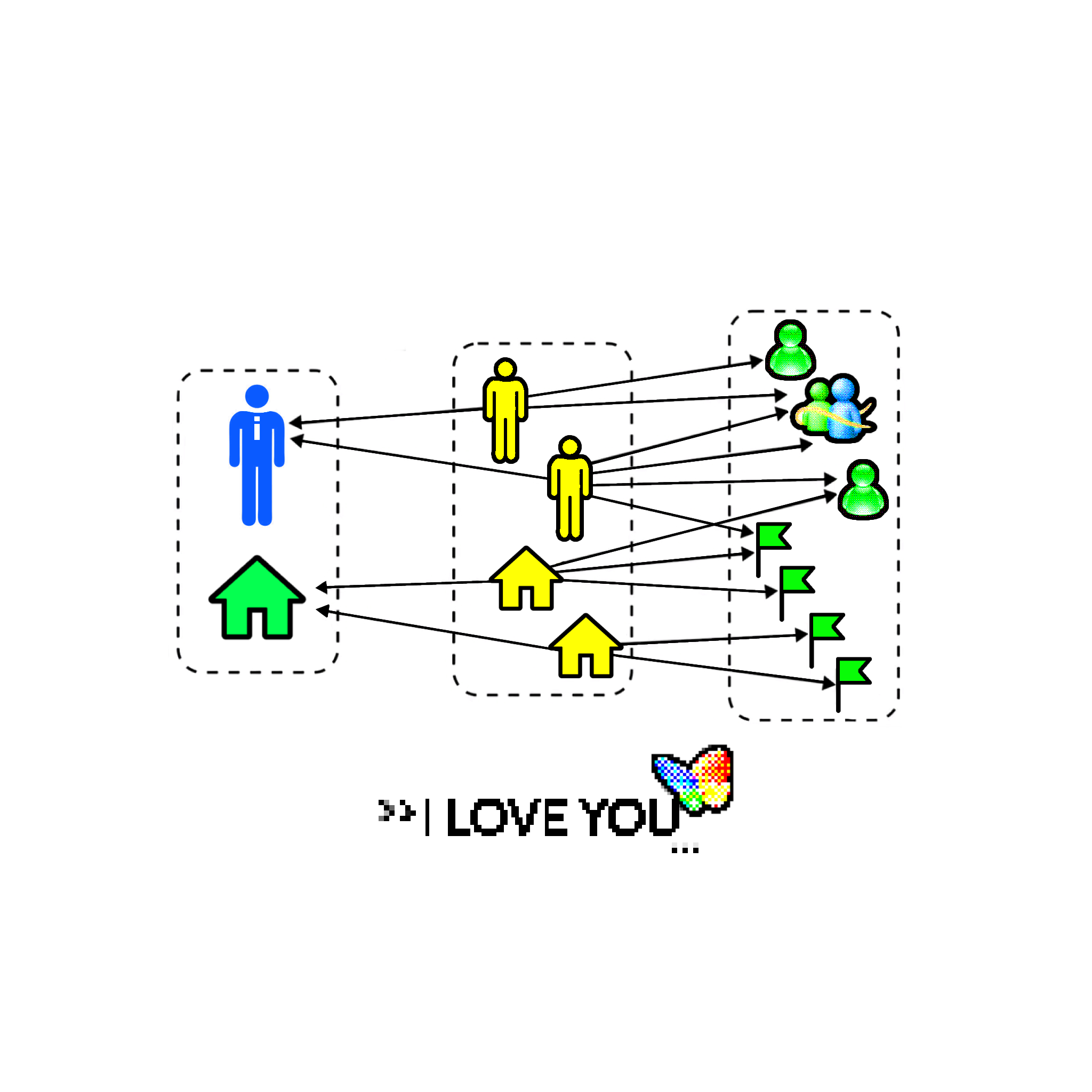
Our common digital language. Our obsolete articles, documentations and charts. Styled like a system chart from an early 2000s programming textbook, now behind gallery glass like a relic of abandonware. The Windows Vista to the soul.
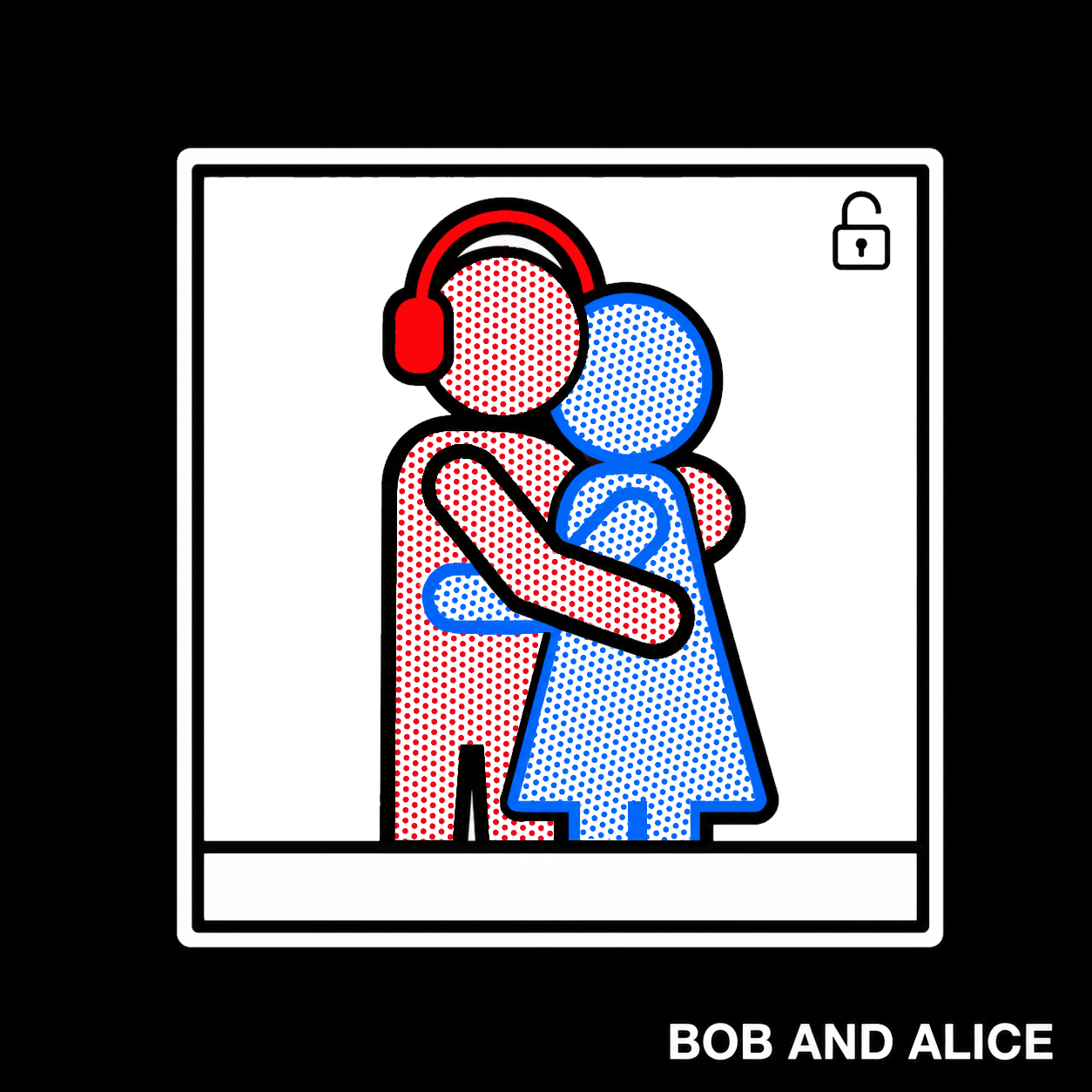
Named after cryptography's classic placeholders for secure data, Bob and Alice turns digital encryption into a raw, human hug. Framed like a Polaroid with an open padlock, it asks what happens when we drop our defense systems to truly connect.
Digital sculpture · OpenSCAD source
3D-printable statuettes
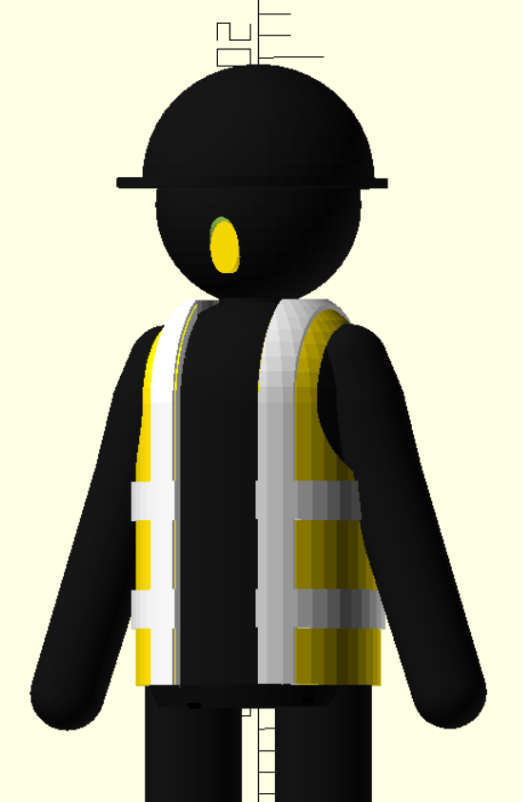
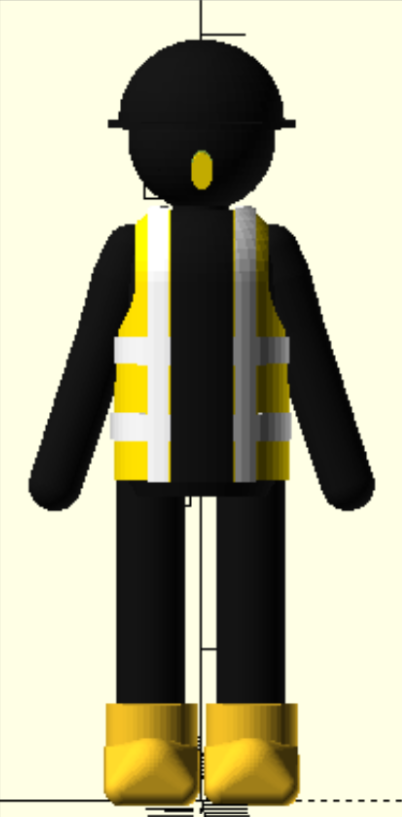
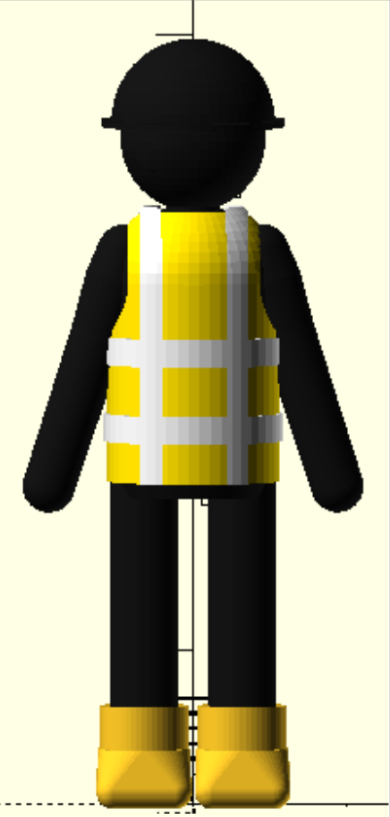
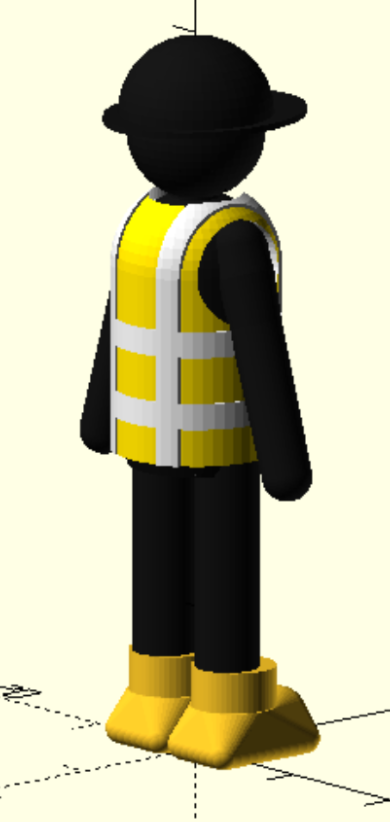
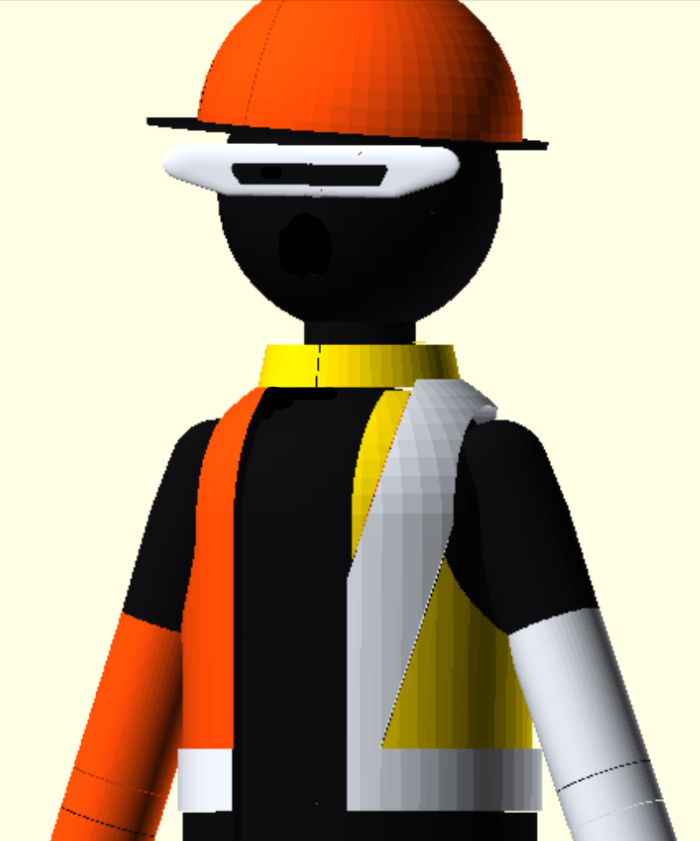
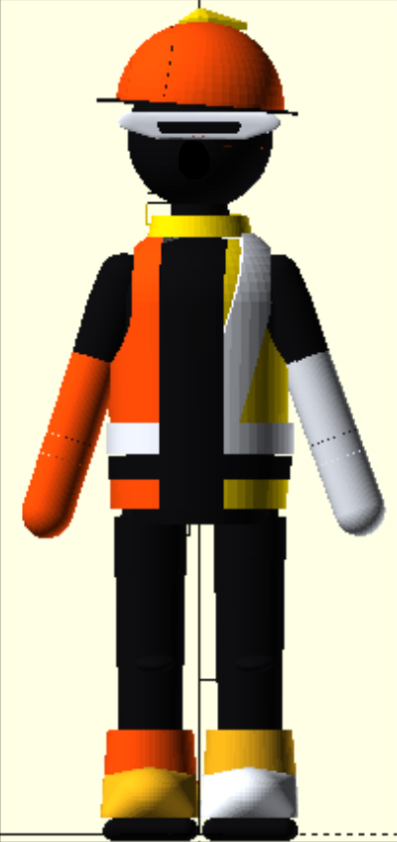
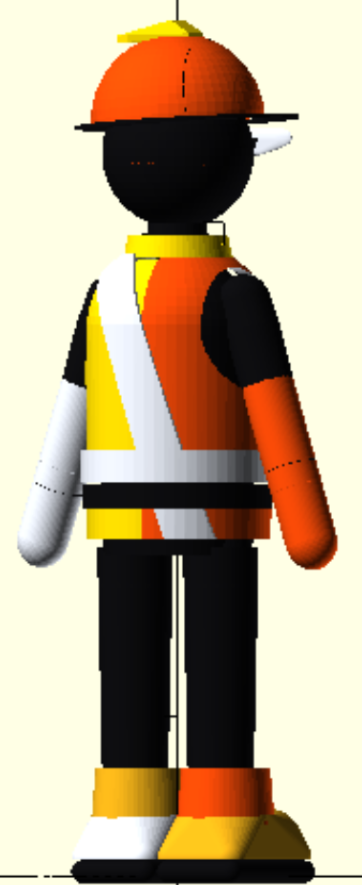
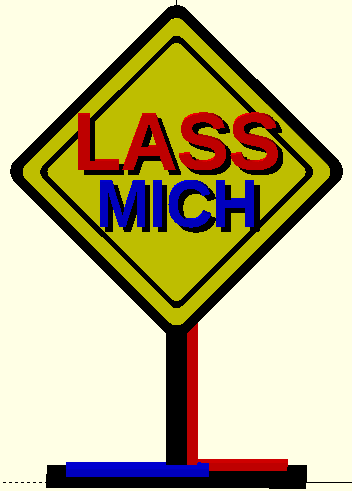
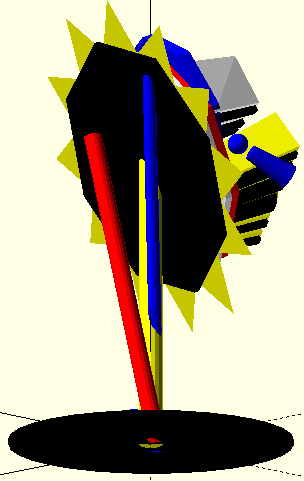
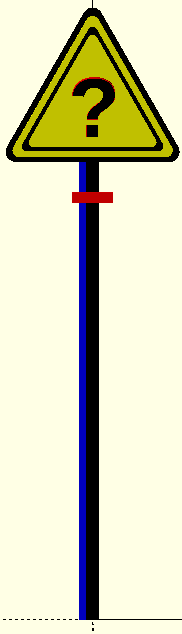
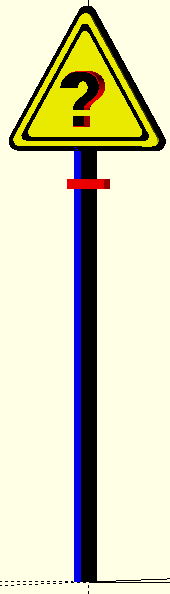
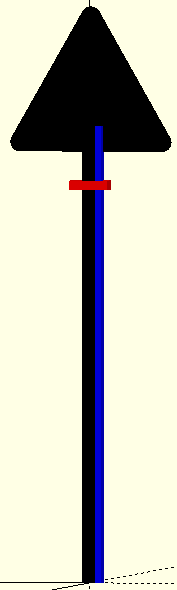
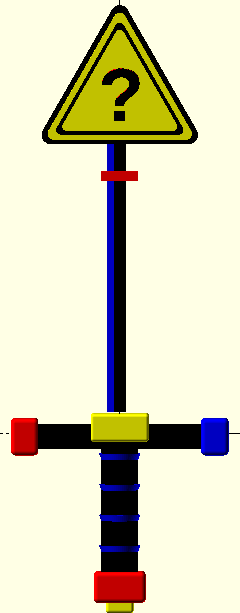
The recurring pictogram characters in the artwork featured above (and some positive signs). These models were created purely from lines of code and math equations, bridging computer science, geometry and art.
Below are editable OpenSCAD character models designed to move from screen to
physical form. Render each source file, export it as STL and slice it for the material and printer of your choice.
OpenSCAD · Exportable to STL
KONSTRUKTIVMÄNNCHEN
Designed for 3D printing
Detail
Front
Rear
Three-quarter
OpenSCAD · Exportable to STL
KONSTRUKTIVESFEEDBACK
Designed for 3D printing
Visor detail
Front
Rear
OpenSCAD · Exportable to STL
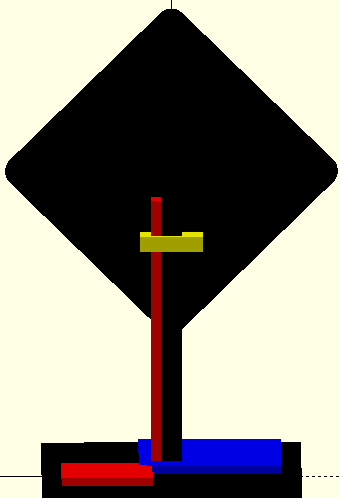
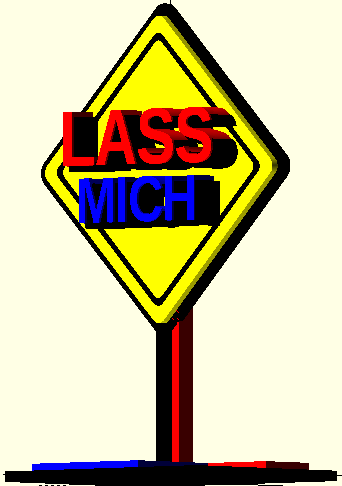
LASSMICH
Designed for 3D printing
Front
Rear
Side / depth
OpenSCAD · Exportable to STL
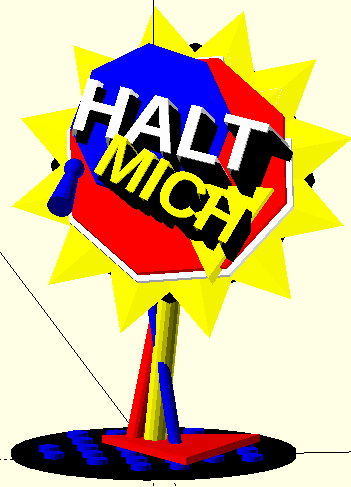
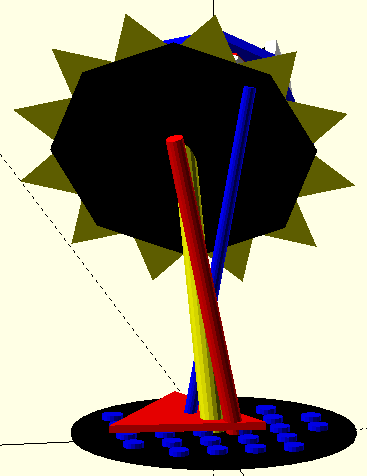
HALTMICH
Designed for 3D printing
Front
Rear
Side / structure
OpenSCAD · Exportable to STL
KONTROLTEILSCHWERT
Designed for 3D printing
Front
Three-quarter
Rear
With Handle
Artist’s Note
Beginning from the visual language of De Stijl and Neo-Constructivism (primary color, linear structure, modular balance) the works "fracture" the modernist grid through industrial imagery, scientific infrastructure, browser-era interfaces and compressed internet memory.
Rather than seeking perfect order, the compositions explore: "What happens when modernist clarity encounters technological pressure, surveillance aesthetics and the unstable digital world?"